
Blog

Vocalize

Browse by Tag


 Customer Service Rating by LivePerson

Follow Me


Plastic Sheeting Blog. Click on Home for all our product categories...

Current Articles | RSS Feed RSS Feed

Will Self-Adhesive films Adhere to Concrete?


Question:   I am looking at an application where I need to protect holes in precast concrete structures from filling with water.  Will your Glass Plastic product stick to a very smooth concrete finish? 

Answer:  Thank you for your email, and interest in self-adhesive surface protection films.  If you were to try to use Glass Plastic on concrete, regardless of how smooth the finish, you would swear it had no adhesive.  Yet if you took the same roll and tried it on glass, it would stick beautifully.  Part of what we take advantage of with glass protection is the ionic nature of glass. 

For your project, a much more aggressive adhesive would be needed.  This depends on how smooth the concrete being covered is, and whether or not it has been sealed.  We have had quite a few customers use one of our products to cover concrete while they are re-surfacing asphalt parking lots. This is honestly about the only experience we have with covering concrete, because we normally recommend against it.  The product that has been used is a 6 mil film with an adhesive system called 479.  It is fairly aggressive as surface protection films go, but this is normally needed to adhere to concrete, and even then the concrete needs to be pretty smooth or it will not adhere well enough to support its own weight.

It is important to know how long the film would be in place.  Surface protection films must be applied to cured surfaces in temperatures fairly close to room temperature for the adhesive systems to “wet out” properly.  In colder climates, quite a few of our customers warm the rolls, and say they work pretty well on colder surfaces.

Microscopically speaking, concrete has a very open porous system, and it often holds quite a bit of moisture.  Moisture is the enemy of adhesive systems of the types used on surface protection films.  A water-based adhesive system is slippery until the water is removed, then it becomes sticky.  If water is present it can re-hydrate the adhesive system to some degree, and cause not only the loss of adhesion, but can also cause adhesive residue transfer.  If the surface protection film is left on concrete for an extended period of time, adhesive residue transfer becomes more and more likely.  Really the only applications where we have had reports of it being used successfully are for days, not weeks or months.

If the concrete is sealed, then the film adheres much easier, and the chances of problems are reduced significantly.  Once the film is well adhered to sealed concrete, it will usually stay adhered, even during inclement weather.

If you want to experiment we can send some samples for you to test.  Yours is a difficult application for anything self-adhesive unfortunately.

Best Tape To Use With a Vapor Retarder


We are often asked, "what is the best tape to use with vapor retarders?" Essentially here are three tapes which are ideally used with vapor retarders. 

First for seaming, we have an excellent Vapor Tape, which has been formulated to be waterproof, and to stick extremely well to polyethylene vapor retarders.  It also seals well around protrusions.

Seond we offer Vapor Tape Plus, which is a single-sided aluminum foil tape with a release liner for ease of installation. The aluminum foil has very high impermeability to methane and other gases. Acrylic adhesive provides outstanding adhesion to polyethylene over a wide temperature range. Typical uses include joining and sealing gas/moisture barriers.

Third is a Sealing Tape, called Butyl Seal Tape.  The Butyl tape has a reinforcement between double coated adhesive sides.  This double-sided tape is used to attach vapor retarders to foundation walls, to protrusions, and ideally between overlapped layers of the vapor retarder as added insurance against penetration by water or water vapor (and many other types of vapors).  This tape is permanently flexible, completely water-proof, and is incredibly sticky.  It creates a permanent seal, which does not lessen over time.

 Very few tapes are as ideally suited to this difficult application as these two tapes.  First many tapes do not adhere well to polyethylene sheeting of any kind.  Second, the introduction of water or water vapor on a long-term basis adversely affects many tapes. Many tapes and types of adhesives age over time, and basically deteriorate.  The tapes we use are high performance tapes that have been tested and used in these applications for decades.

What makes a vapor barrier "high performance"?


vapor barrierIf you are doing your homework regarding vapor barriers, you have probably come across descriptions for "vapor barriers" and "high performance vapor barriers."  What makes a vapor barrier "high performance"?

There are several factors that contribute to the high performance credential. A high performance vapor barrier will always be made from 100% virgin resin.  This means there is no re-ground plastic or other contaminants in the liner. 100% virgin liners hold up much better than liners you may find in a home improvement store that says,"6 mil vapor barrier".  There is confusion in the market in that people think that is a liner is a certain mil thickness, then it will perform well as a vapor barrier. Nothing is farther from the truth.  If you don't want to replace your vapor barrier a few years down the road, research and make sure you are getting the best liner to meet your special circumstances.

The next factor that makes a vapor barrier "high performance" is the fact that the liner/barrier is specifically manufactured to be a high performance vapor barrier.  This engineered plastic vapor barrier was constructed to meet certain criteria.  Under consideration is what the surface will be like where the liner will be placed.  Is the area rocky or made up of a granular fill?  There are test methods that are performed on liners to insure they will hold up when they are in contact with granular fill. This test is called, ASTM E1745.  This test also  places the vapor barrier in simulated situations to mimic service conditions.

High performance vapor barriers are tested for their water vapor permeance or water vapor transfer (WVT), tensile strength, and puncture resistance. They are also must be resistant to decay.  Click here if you want to learn more about the strict guidelines that high performance vapor barriers must pass.

Some other high performance vapor barriers also called, vapor retarders are engineered to block deadly soil borne gases like radon.  These vapor barriers are made with such a tight cell structure that they are 50 percent less permeable than typical polyethylene vapor retarders. 

To read about the various high performance vapor barrier, please click here.


Floor Plastic Protects Hard Surfaces


Floor Plastic for Hard surfacesWhen it is time to paint the walls in a room, and you want to protect the tile, ceramic, stone or any hard, non-porous surface, Floor PlasticTM is an easy solution to save you time and clean up. Floor PlasticTM  is a self adhesive, water-based film that is adhered to the flooring for up to 45 days while you get the job done. The film is reverse wound on rolls for quick application.  It may be used on factory finished hardwood floors that are in excellent condition.  It is recommended that you try a small piece in an obscure are to be sure.  So often people will put down drop cloths that slip and slid all over the place. If you look at the photograph above you will see how the film can be placed right up to the baseboards insuring every inch is protected.  With Floor PlasticTM  you can relax knowing your floor is safe from spills and drops of paint that find their way onto the floor.

Floor PlasticTM is made in the United States in an ISO 9001-2000 certified plant.  The great news is you will not have any adhesive transfer! 


Floor PlasticTM- This incredible hard surface, self-adhesive floor protection film (Green film in picture above) will withstand construction activities and foot traffic for 45 days in normal circumstances.  State of the art water-based adhesives are used while manufacturing this product under very strict quality assurance guidelines (ISO9001-2000 certified facilities) in the USA.   Packaging is always in generic boxes with generic labels for distributors who wish to have us drop ship to their customers.  Reverse wound on the rolls for the most popular uses, for the fastest application.  Recommended for factory finished hardwood floors (in excellent condition), laminates, tile, ceramic, stone, or any hard non-porous surface needing protection from workmen activities.


Glass Film keeps windows protected during painting


Question:  I am painting the exterior of my home. What type of protection exists to keep the glass in my windows free of over-spray and paint drips?
Answer:  Bar none, the best thing you can do to keep your windows nice and clean during painting is to cover them with a self-adhesive glass film/ Glass Plastic that is made specifically for glass.  It is quite a job to get paint off a window pane after it gets covered. The biggest mistake people make is to take a razor blade to the paint in hopes of scrapping it off. What can result is a scratched or etched window glass.  Of course you can have the glass professionally buffed, but that is much more expensive than taking the proper precaution before your windows are spattered with paint.
Glass Plastic Glass film

Glass Plastic from Global Plastic Sheeting is made specifically to go on windows both inside and outside.  Depending on the length of the job will determine if you want the standard Glass Plastic, or the one year version that can be left on for a year.  This glass film is made with a special UV additive that keeps the sun and its rays from destroying the plastic.  While the glass film comes in both blue and clear, you may want to consider the clear so that your interior won't take on a blue hue!  Both the clear and blue window films hold up just as well as each other.  When the job is finished, just pull off the Glass Plastic and dispose of it.  What is left are nice and clear windows.

To learn more about Glass Plastic, please click here.

What makes High Density Polyethylene "high density"?


Question:  When does polyethylene go from regular old "polyethylene" to "high density polyethylene" or HDPE?

Answer:  The density of polyethylene is measured in grams per cubic centimeter or g/cm³.  The mass density of high density polyethylene can range from 0.93 to 0.97 g/cm³.   Surprisingly, the difference in density between Low Density Polyethylene (LDPE) is 0.02g/cm³.  LDPE had a density range of 0.910–0.940 g/cm3.  As you can see, there is very little difference in the density. What makes HDPE stronger is the way the structure of the molecules lines up.  HDPE has stronger intermolecular forces and tensile strenghth which translates into a higher specific strength.  It is harder, more opaque, and can tolerate higher temperatures (120 °C/ 248 °F for short periods, 110 °C /230 °F continuously). than LDPE .   LDPE can withstand temperatures of 80 °C continuously and 95 °C for a short time. 

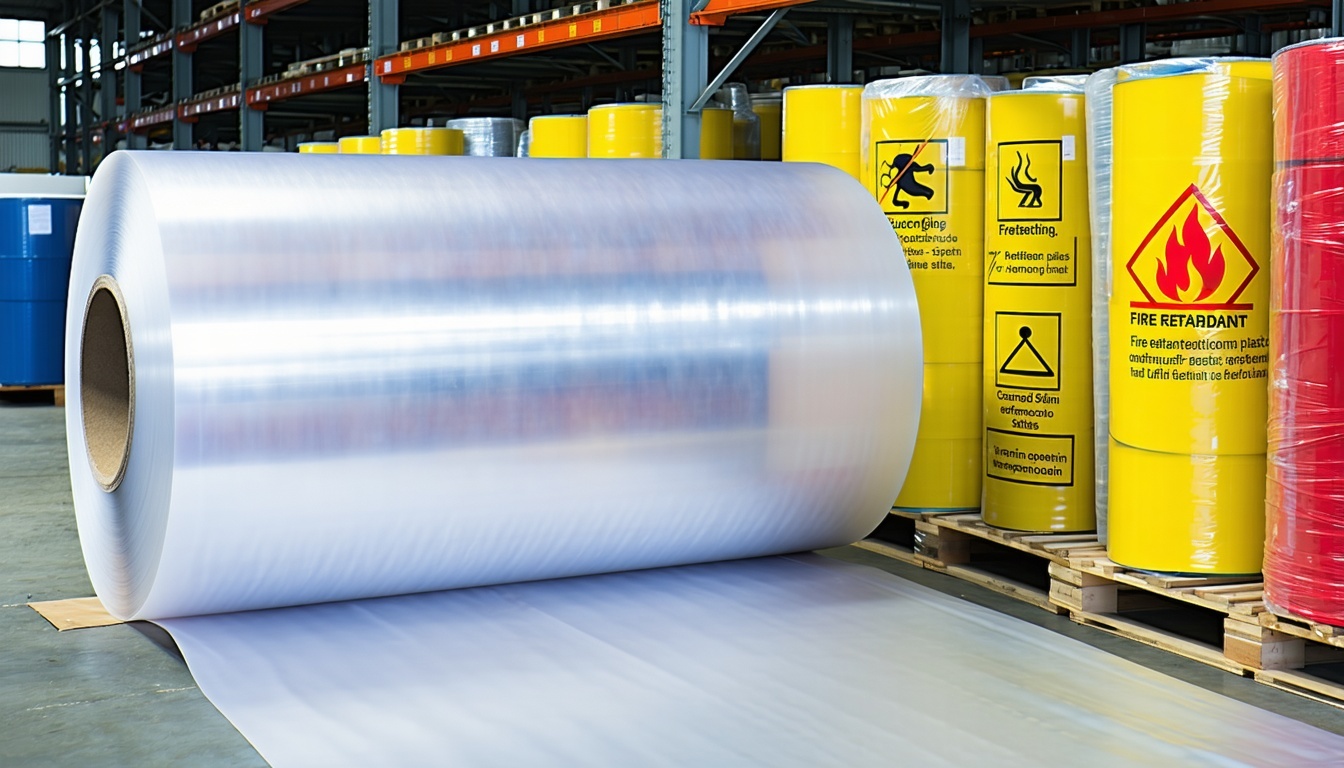
Fire Retardant Clear Material- Does it exist?


Question:  I am looking for a fire retardant clear material, with no print or design, to be used in a stage set scenery.  Ideally, It should preferably resemble freezer vinyl strip curtains but only visually.  Do you have any product that might fit the bill?

Answer: The strip doors are all made from vinyl that is very thick. There are versions that are thinner, a number of which are FR.  Vinyl is often not the favorite material in the eyes of Fire Marshals or other officials.  Vinyl, even the FR versions produce a lot of smoke, plus toxic fumes when combustion takes place.  When used vertically, this problem is greater.  I would check to find out if vinyl can be used.  One huge advantage vinyl has for your application is that the FR versions are clear.  Most FR vinyl passes the CA Fire Marshal Title 19.  Very little, but some of it passes the NFPA 701 (which is much harder to pass).

 Polyethylene turns either a milky whitish yellowish color when it is made FR.  The additives used to interrupt the combustion process keep the film from being clear.  In thinner versions, the film is translucent, but definitely not clear.  By the time the film is 6-8 mil, it is getting pretty opaque, but still has light transmission.  We have some 4 mil and 6 mil sheeting that is Natural FR, passes the CA Fire Marshal Title 19.  This is basically the construction version of Visqueen made fire retardant.  

If you have unique questions, call 866 597 9298 and ask for Lee.  You may contact him by email- just click here.

HDPE or PVC Liner- Which is the better choice?


Question:  Which is the better choice when it comes to HDPE or PVC for use as a liner?

Answer:  This is quite a question that I believe could be argued both ways.  The one factor that tips the scales in the favor of HDPE (in my opinion) is the negative effect PVC has on the environment.  PVC and its disposal poses substantial environmental and human health hazzards. In fact in European nations, certain uses of PVC have been eliminated for environmental reasons.  When PVC is produced, it releases toxic by-products during its creation.  Large quantities of hazardous organochlorine by-products are formed and released into the environment.  Components of PVC can affect feedstock and build up in the tissue of living things.  To learn more about PVC's environmental effects, visit websites on the internet.

As far as PVC liners go- they are used because it is a highly flexible, cost-effective waterproofing geomembrane.  It is highly flexible and redily conforms to the surface it comes in contact with.

HDPE gains my respect because it is a very strong, long lasting liner that can be recycled.  It has high chemical resistant qualities that protect the environment from toxic spills when used in that capacity.  It is cost effective, and perhaps the most cost effective liner for large projects.  HDPE comes in a wide range of thicknesses and sizes.

Tags: , ,

ASTME 84 versus CPAI-84- What's the difference?


Question:  What is the difference between ASTME 84 and CPAI-84?

Answer:  ASTM E-84 measures the flame spread and smoke index, which are considered the surface burning characteristics of a material.  Depending on the numbers, materials can have classifications of Class A, B, or C according to NFPA , ANSI/NFPA No. 101, "life Safety Code" , 2006 Edition, or IBC (International Building Code), 2006 Edition, Chapter 8, Interior Finishes, Section 803,  if they pass any level of this standard.  The test is conducted in a fire tunnel using a 22" x 24' sample of the material.  The ignition source is 7 seconds in duration, total test is 10 minutes.  The flame front cannot exceed 24" during the test.  Results are expressed as Flame Spread Index, and Smoke Developed Value.

CPAI-84 does not measue flame spread. It measures the char length and mass lost as well afterflame.  CPAI-84 does not insure that a fabric is flame retardant.  It is a test method for evaluating the flame resistance of fabrics and other materials such as plastic sheeting.

Reinforced Plastic Sheeting- The Clear Choice


Reinforced plastic sheeting is also referred to as "string reinforced plastic", "Scrim reinforced liners" and "cord reinforced liners" to name a few.  Reinforced plastic sheeting can come in clear, natural, black, white, blue, or any color your heart desires. The key for a custom color is quantity. 

Reinforced plastic sheeting is used for a multitude of applications.  The fact that it is string reinforced makes this plastic sheeting hold up under harsh environments. The string not only adds strength to the plastic, but it inhibits/ stops tears in the vicinity of the puncture.  Due to its versatility, one of its popular uses is as an enclosure film.  Builders will use it to enclose an area when they are are working to keep the elements out. They may also want to keep dust from traveling to another part of the building.

Reinforced Plastic Sheeting

Reinforced Plastic Sheeting can be used as a hay tarp.  UV additives are added to the formulation so the tarp will not readily disintegrate in the sun.  Hem and grommets can be added to this reinforced liner in order to hold it in place. 

Hay Tarp

The theater is another place you will see scrim reinforced plastic sheeting.  When hung on stage, lighting can be placed in a variety of places to create the desired effect.  It is used as a way to portray a revelation about one thing or another.  It can give off a ghostly vanishing effect. Again, the uses are endless.

Click here for a selection of reinforced plastic sheeting options. It's such a great product that can be reused when properly cared for.

All Posts
Bookmark and Share