


Non-woven Polypropylene Geotextiles for Drainage, Underlayment, Erosion Control, Filtration

Polypropylene Non Woven Geotextiles
The world of construction relies on a hidden army of unsung heroes. One such hero is the polypropylene non-woven geotextile. While it may not look glamorous, this versatile fabric plays a crucial role in ensuring the stability, drainage, and longevity of various projects. Let's delve deeper into the world of non-woven geotextiles, exploring their types, applications, and unique properties.
UnderstandingNon-Woven Geotextiles:
- Non-Woven Magic: Unlike woven fabrics with a distinct criss-cross pattern, non-woven geotextiles are formed by mechanically or thermally bonding polypropylene fibers together. This creates a felt-like material with a random fiber orientation.
- Weight Matters: Non-woven geotextiles come in various weights, typically measured in ounces per square yard (oz/yd²). The 4.5 oz option we explored previously is just one example. Lighter weight options are ideal for drainage and separation applications, while heavier weights can offer increased strength for specific needs.
- Stretchy Superpower: Compared to their woven counterparts, non-woven geotextiles exhibit greater elongation or stretch. This seemingly simple property is crucial for applications like drainage. As water flows through the plane of the fabric, the stretch allows it to accommodate the flow without compromising its integrity.
Applications: A Spectrum of Uses:
- Drainage Champion: In drainage systems like French drains and trenches, non-woven geotextiles act as filter fabrics. They allow water to pass through freely while filtering out soil particles. This prevents clogging and ensures efficient drainage, protecting foundations and preventing water accumulation.
- Separation Specialist: Non-woven geotextiles excel at separating different layers in construction projects. For example, in road construction, they separate the subgrade (underlying soil) from the aggregate base course. This prevents fine soil particles from contaminating the base, which could compromise the road's structural integrity. Similarly, in landscaping, they separate gravel or sand from topsoil, keeping pathways level and preventing weed growth.
- Erosion Control Warrior: On slopes and behind retaining walls, non-woven geotextiles act as a barrier against erosion. They allow water to filter through while retaining soil particles, preventing the soil from washing away and maintaining slope stability.
- Waste & Oil Containment Partner: The strength and chemical resistance of some non-woven geotextiles make them valuable in waste and oil containment applications. They can be used as liners under waste disposal sites or as a secondary containment layer to prevent leaks or spills from contaminating the surrounding environment.
- Beyond Construction: The applications of non-woven geotextiles extend beyond construction. They can be used in boatyards as a filter to collect paint chips and debris while allowing water to flow through during hull repairs.
Strength and Durability: Non-Woven Fabrics- Built to Last
Polypropylene non-woven geotextiles offer a compelling combination of benefits:
- Permeability: The key to their success in drainage applications, these fabrics allow water to pass through efficiently while retaining their filtering capabilities.
- Strength: While varying depending on weight, non-woven geotextiles offer sufficient tensile strength to withstand typical construction loads and pressures.
- Puncture Resistance: They provide a layer of protection for underlying soil or drainage systems against punctures from sharp objects like rocks.
- Durability: Polypropylene is resistant to UV degradation, rotting, and chemical attack, ensuring the geotextile's longevity underground or exposed to the elements.
Choosing the Right Geotextile:
With various weights and properties available, selecting the right non-woven geotextile for your project is crucial. Here are some factors to consider:
- Application: Identify the primary function – drainage, separation, erosion control, etc.
- Strength Requirements: Consider the expected loads and stresses the geotextile will encounter.
- Permeability Needs: The flow rate of water that needs to pass through the fabric is important.
- Site Conditions: Factors like soil type and drainage characteristics can influence your choice.
Consulting with a construction professional or geotextile supplier can help you select the most suitable option for your specific needs.
The Takeaway:
Polypropylene non-woven geotextiles are a versatile and essential material in the construction industry. Their unique properties make them valuable for drainage, separation, erosion control, and even waste containment. By understanding their applications, strengths, and how to choose the right type, you can leverage these workhorses to ensure the success and longevity of your next project.
Learn further about non woven geotextiles here.
Non-woven Geotextile Fabric Weights- Click on the link below
GPS Non-Woven Geotextile 3.1 oz
GPS Non-Woven Geotextile 3.5 oz
GPS Non-Woven Geotextile 4.0 oz
GPS Non-Woven Geotextile 4.5 oz
GPS Non-Woven Geotextile 6.0 oz
GPS Non-Woven Geotextile 7.0 oz
GPS Non-Woven Geotextile 8.0 oz
GPS Non-Woven Geotextile 10.0 oz
GPS Non-Woven Geotextile 14.0 oz
GPS Non-Woven Geotextile 16.0 oz
GPS Non-Woven Geotextile 20.0 oz
GPS Non-Woven Geotextile 24 oz
GPS Non-WOven Goetextile 32 oz
Polypropylene Products: fluted sheets, non-woven geotextiles, Enkamat drainage boards, reinforced polypropylene liners click here


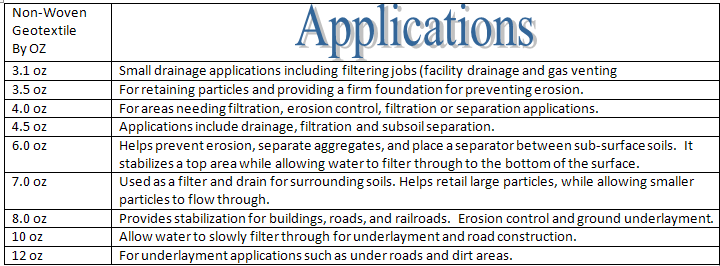
The chart below represents the Minimum Average Roll Values or M.A.R.V.