Plastic Sheeting Blog. Click on Home for all our product categories...

Lettuce Raft Aquaponics-5 tips for Growing Lettuce

Posted by Nana Hinsley on Fri, Nov 14, 2014 @ 01:43

Are you ready to toss a fabulous salad with lettuce that you grew yourself?lettuce just picked resized 600 It's much tastier, healthier, and fulfilling to know you grew this lettuce yourself. In no time you will have your own lettuce on the table.

Lettuce in lettuce raft resized 600

Tip #1: Get a Beaver Plastic Lettuce raft (click here) which will float on top of the tank/aquarium you are going to use for your aquaponics system.

Tip #2:  You will need a container to hold water.  An aquarium or any clean container that can hold more than 10 gallons of water will work.

Tip #3: Next you need a means for moving the water around and a way to filter it. Your filter needs to pull water through the gravel to promote bio-filtration. Either an air pump and air stones can be used, or you can get power heads that have an active water pump that draws the water up the riser tubes of the filter. This method is called a RAS raft system or Recirculating Aquaculture System.

If you are wondering why we are not adding fish to the aquarium- Some people contend that if you float rafts in fish ponds, the contaminants in the water cover the roots, keeping them from absorbing the water and nutrients for them to grow.  In an informal side by side test, the plants without the fish did much better.

Tip # 4:  Aquarium gravel is a must- so much so that you will need 2 inches of gravel to put under your filter.  Aquarium gravel is preferable since int won't leach into the water.

Tip #5:  Now you need the seeds and the grow media that you will place in the lettuce raft.  

Tip #6.  pH seems to be the key to life in so many areas.  It's the key to the success of your growing lettuce in your lettuce raft as well.  Get a pH test kit to maintain the proper pH.

Tip #7:Good light either from a window or a grow light is a must.

With these few components you have the start to growing lettuce in your lettuce raft. 

Click for pricing/ info Search for Greenhouse Plastic, tapes, fire retardant films, plastic sheeting Home page www.globalplasticsheeting.com plastic sheeting, tapes, strapping fire retardant films greenhouse plastic Plastic Sheeting Thickness chart. How thick is best for you?


Tags: lettuce raft

Organic Certification- What is it?

Posted by Nana Hinsley on Thu, Oct 23, 2014 @ 09:32

Question: Please explain organic certification.

Answer:  The following section would be a good read for you.  It was taken from National List:Below I have highlighted the areas of the National List of allowed synthetic substances that pertain to pond liner and other plastics. We are kind of in uncharted territory with Aquaponics so just because it is not listed doesn't mean it's not allowed. As long as any synthetic substance meets the guidelines highlighted below than we do not expect to have any problem with certification. The blue highlight is the criteria that any synthetic product must meet to meet the certification.  Highlighted in yellow is where it actually states that plastics are allowed as long as it is not Polyvinyl Chloride. Hope this makes sense.

§ 205.600   Evaluation criteria for allowed and prohibited substances, methods, and ingredients.

The following criteria will be utilized in the evaluation of substances or ingredients for the organic production and handling sections of the National List:

(a) Synthetic and nonsynthetic substances considered for inclusion on or deletion from the National List of allowed and prohibited substances will be evaluated using the criteria specified in the Act (7 U.S.C. 6517 and 6518).

(b) In addition to the criteria set forth in the Act, any synthetic substance used as a processing aid or adjuvant will be evaluated against the following criteria:

(1) The substance cannot be produced from a natural source and there are no organic substitutes;

(2) The substance's manufacture, use, and disposal do not have adverse effects on the environment and are done in a manner compatible with organic handling;

(3) The nutritional quality of the food is maintained when the substance is used, and the substance, itself, or its breakdown products do not have an adverse effect on human health as defined by applicable Federal regulations;

(4) The substance's primary use is not as a preservative or to recreate or improve flavors, colors, textures, or nutritive value lost during processing, except where the replacement of nutrients is required by law;

(5) The substance is listed as generally recognized as safe (GRAS) by Food and Drug Administration (FDA) when used in accordance with FDA's good manufacturing practices (GMP) and contains no residues of heavy metals or other contaminants in excess of tolerances set by FDA; and

(6) The substance is essential for the handling of organically produced agricultural products.

(c) Nonsynthetics used in organic processing will be evaluated using the criteria specified in the Act (7 U.S.C. 6517 and 6518).

§ 205.601   Synthetic substances allowed for use in organic crop production.

In accordance with restrictions specified in this section, the following synthetic substances may be used in organic crop production: Provided, That, use of such substances do not contribute to contamination of crops, soil, or water. Substances allowed by this section, except disinfectants and sanitizers in paragraph (a) and those substances in paragraphs (c), (j), (k), and (l) of this section, may only be used when the provisions set forth in §205.206(a) through (d) prove insufficient to prevent or control the target pest.

(a) As algicide, disinfectants, and sanitizer, including irrigation system cleaning systems.

(1) Alcohols.

(i) Ethanol.

(ii) Isopropanol.

(2) Chlorine materials— Except, That, residual chlorine levels in the water shall not exceed the maximum residual disinfectant limit under the Safe Drinking Water Act.

(i) Calcium hypochlorite.

(ii) Chlorine dioxide.

(iii) Sodium hypochlorite.

(3) Copper sulfate—for use as an algicide in aquatic rice systems, is limited to one application per field during any 24-month period. Application rates are limited to those which do not increase baseline soil test values for copper over a timeframe agreed upon by the producer and accredited certifying agent.

(4) Hydrogen peroxide.

(5) Ozone gas—for use as an irrigation system cleaner only.

(6) Peracetic acid—for use in disinfecting equipment, seed, and asexually propagated planting material.

(7) Soap-based algicide/demossers.

(8) Sodium carbonate peroxyhydrate (CAS #–15630–89–4)—Federal law restricts the use of this substance in food crop production to approved food uses identified on the product label.

(b) As herbicides, weed barriers, as applicable.

(1) Herbicides, soap-based—for use in farmstead maintenance (roadways, ditches, right of ways, building perimeters) and ornamental crops.

(2) Mulches.

(i) Newspaper or other recycled paper, without glossy or colored inks.

(ii) Plastic mulch and covers (petroleum-based other than polyvinyl chloride (PVC)).

(c) As compost feedstocks—Newspapers or other recycled paper, without glossy or colored inks.

(d) As animal repellents—Soaps, ammonium—for use as a large animal repellant only, no contact with soil or edible portion of crop.

(e) As insecticides (including acaricides or mite control).

(1) Ammonium carbonate—for use as bait in insect traps only, no direct contact with crop or soil.

(2) Aqueous potassium silicate (CAS #–1312–76–1)—the silica, used in the manufacture of potassium silicate, must be sourced from naturally occurring sand.

(3) Boric acid—structural pest control, no direct contact with organic food or crops.

(4) Copper sulfate—for use as tadpole shrimp control in aquatic rice production, is limited to one application per field during any 24-month period. Application rates are limited to levels which do not increase baseline soil test values for copper over a timeframe agreed upon by the producer and accredited certifying agent.

(5) Elemental sulfur.

(6) Lime sulfur—including calcium polysulfide.

(7) Oils, horticultural—narrow range oils as dormant, suffocating, and summer oils.

(8) Soaps, insecticidal.

(9) Sticky traps/barriers.

(10) Sucrose octanoate esters (CAS #s—42922–74–7; 58064–47–4)—in accordance with approved labeling.

(f) As insect management. Pheromones.

(g) As rodenticides.

(1) Sulfur dioxide—underground rodent control only (smoke bombs).

(2) Vitamin D3.

(h) As slug or snail bait. Ferric phosphate (CAS # 10045–86–0).

(i) As plant disease control.

(1) Aqueous potassium silicate (CAS #–1312–76–1)—the silica, used in the manufacture of potassium silicate, must be sourced from naturally occurring sand.

(2) Coppers, fixed—copper hydroxide, copper oxide, copper oxychloride, includes products exempted from EPA tolerance, Provided, That, copper-based materials must be used in a manner that minimizes accumulation in the soil and shall not be used as herbicides.

(3) Copper sulfate—Substance must be used in a manner that minimizes accumulation of copper in the soil.

(4) Hydrated lime.

(5) Hydrogen peroxide.

(6) Lime sulfur.

(7) Oils, horticultural, narrow range oils as dormant, suffocating, and summer oils.

(8) Peracetic acid—for use to control fire blight bacteria.

(9) Potassium bicarbonate.

(10) Elemental sulfur.

(11) Streptomycin, for fire blight control in apples and pears only.

(12) Tetracycline, for fire blight control only and for use only until October 21, 2012.

(j) As plant or soil amendments.

(1) Aquatic plant extracts (other than hydrolyzed)—Extraction process is limited to the use of potassium hydroxide or sodium hydroxide; solvent amount used is limited to that amount necessary for extraction.

(2) Elemental sulfur.

(3) Humic acids—naturally occurring deposits, water and alkali extracts only.

(4) Lignin sulfonate—chelating agent, dust suppressant, floatation agent.

(5) Magnesium sulfate—allowed with a documented soil deficiency.

(6) Micronutrients—not to be used as a defoliant, herbicide, or desiccant. Those made from nitrates or chlorides are not allowed. Soil deficiency must be documented by testing.

(i) Soluble boron products.

(ii) Sulfates, carbonates, oxides, or silicates of zinc, copper, iron, manganese, molybdenum, selenium, and cobalt.

(7) Liquid fish products—can be pH adjusted with sulfuric, citric or phosphoric acid. The amount of acid used shall not exceed the minimum needed to lower the pH to 3.5.

(8) Vitamins, B1, C, and E.

(9) Sulfurous acid (CAS # 7782–99–2) for on-farm generation of substance utilizing 99% purity elemental sulfur per paragraph (j)(2) of this section.

(k) As plant growth regulators. Ethylene gas—for regulation of pineapple flowering.

(l) As floating agents in postharvest handling.

(1) Lignin sulfonate.

(2) Sodium silicate—for tree fruit and fiber processing.

(m) As synthetic inert ingredients as classified by the Environmental Protection Agency (EPA), for use with nonsynthetic substances or synthetic substances listed in this section and used as an active pesticide ingredient in accordance with any limitations on the use of such substances.

(1) EPA List 4—Inerts of Minimal Concern.

(2) EPA List 3—Inerts of unknown toxicity—for use only in passive pheromone dispensers.

(n) Seed preparations. Hydrogen chloride (CAS # 7647–01–0)—for delinting cotton seed for planting.

(o) As production aids. Microcrystalline cheesewax (CAS #'s 64742–42–3, 8009–03–08, and 8002–74–2)–for use in log grown mushroom production. Must be made without either ethylene-propylene co-polymer or synthetic colors.

Click for pricing/ info Search for Greenhouse Plastic, tapes, fire retardant films, plastic sheeting Home page www.globalplasticsheeting.com plastic sheeting, tapes, strapping fire retardant films greenhouse plastic Plastic Sheeting Thickness chart. How thick is best for you?

Tags: organic certification

Lettuce Rafts- Simple Hydroponics

Posted by Nana Hinsley on Thu, Sep 25, 2014 @ 10:31

lettuce rafts

Lettuce rafts (Deep Water Culture) are perhaps the simplest most economical way to grow small herbs and plants in an aquarium or water container that is at least one foot deep. Essentially small plants such as herbs, spinach, basil, cilantro are placed in the lettuce raft and placed on top of the water source. You can grow your seedlings in a growing medium. One example would be the Hydroton balls. They are placed around the seedling to help support them in the lettuce raft.  The water source is nutrient filled to feed the floating plants. Some examples of nutrients is, GH Flora Series. It consists of Flora Grow, Flora Micro and Flora Bloom. It's important that the roots of the plants are long enough to reach the water right after you plant them in your lettuce raft. You will also want to keep the pH of the water in the proper range which is 5.5 to 6.5. Of course, 6.0 if ideal!  The reason the pH is so important is because the plants cannot assimilate the nutrients well if the pH is off. 

The water must be aeriated so that the nutrients and the water itself do not become stagnant. One option for an aeriator is called an Air Stone. This stone is hooked up to a small single-outlet air pump which is outside the reservoir. Some people like to place the air pump higher than the reservoir so that the nutrients don't back up into it.

If you are excited to see plants grow right away, consider choosing plants that have a short growing cycle.  Lettuce and other leafy greens are great for a start.  For your kitchen you may want to have herbs at your fingertips! Just place your lettuce raft system in a sunny window. Some types of plants may require an additional light source such as a T5 compact fluorescent grow light.  Other fun plants to consider growing are hot peppers, endives, watercress, basil and dill.  What you don't want to grow are heavy bulky plants such as tomatoes, cucumbers, or sweet peppers.

A little hint for success is to cover any glass aquarium sides with thick paper or cardboard. This will block out the light and help prevent algae. When you want to show off the roots to your visitors, simply remove the paper for all to see.

Most of all have fun and happy growing!

Click for pricing/ info Search for Greenhouse Plastic, tapes, fire retardant films, plastic sheeting Home page www.globalplasticsheeting.com plastic sheeting, tapes, strapping fire retardant films greenhouse plastic Plastic Sheeting Thickness chart. How thick is best for you?

Tags: lettuce raft, hydroponics

Make a Haunted House with Black Plastic Sheeting

Posted by Nana Hinsley on Fri, Sep 19, 2014 @ 09:31

Designing a haunted house is achievable in almost any location in your home. In case you would like to break from Trick or Treating, why not develop a haunted house at your house? With the help of some fire retardant black plastic sheeting, you can build multiple rooms that are creepy, dark and scary! Of course those lucky folks who have a basements to work with- all the better!  Use illumination and music to manufacture a terrifying surroundings.

Many different house hold accessories can be put to good use to make a spooky design. These things can work with nearly any budget. Old articles of clothes as well as materials, or perhaps previous bottles as well as canisters may be recycled as well as employed to create a spooky home-crafted interest. Continue scouring magazines and get ideas to help make your own haunted household.

black plastic fire retardant

Fire retardant black plastic sheeting plus a garage or carport, can transform that space into a wonderful haunted room. Just give it a creepy name, and have a blast! Positioning Halloween props, creepy sound effects, and giant spiders crawling up the wall will have the little ones screaming. Put up fake tombstones as well as a great inflatable haunted household entrance for the wow factor!

Most likely you will need something to hold up your black fire retardant plastic sheeting.  This is where fire retardant tape comes in.  It is so important to use a many fire retardant items in your haunted house, just in case it should come in contact with an open flame.  Fire retardant plastic will not add to the fire. It will melt or extinquish when the flame hits it.

If you want to suspend some creepy things from the ceiling, consider using fire retardant red stripe strapping.  It's much stronger than most twine, and will not be a fuel source should a fire break out.  We know it's unlikely that your haunted house will have a fire- but it's better to be safe than sorry.  If you are building a haunted house for the general public- say at a school, church, or a warehouse- check with your local fire marshal.  They may require fire retardant plastic sheeting, along with the documentation to prove it meets the fire codes.  Click here if you would like to view fire retardant plastic sheeting and tape for use in your haunted house adventure!

Click for pricing/ info Search for Greenhouse Plastic, tapes, fire retardant films, plastic sheeting Home page www.globalplasticsheeting.com plastic sheeting, tapes, strapping fire retardant films greenhouse plastic Plastic Sheeting Thickness chart. How thick is best for you?

Tags: Red Stripe strapping, black plastic, fire retardant black plastic for haunted houses

Plastic Sheeting and Wine- Do they Go Together?

Posted by Nana Hinsley on Wed, Sep 10, 2014 @ 01:38

What does flexible plastic sheeting and wine have in common?  If you are a vineyard trying to conserve water, plastic sheeting can play a big role in your effort.  One of our customers, Pahlmeyer Waters Ranch Vineyard came up with the brilliant idea to take our scrim reinforced plastic sheeting and place the tarps between the rows and connected them under the vines, insuring there weren't any gaps.  When the rains came, the water ran down the plastic right into their silt pond as planned.  This plan worked like a charm saving water while allowing the vines to grow.


plastic sheeting for water reclamation


Click for pricing/ info Search for Greenhouse Plastic, tapes, fire retardant films, plastic sheeting Home page www.globalplasticsheeting.com plastic sheeting, tapes, strapping fire retardant films greenhouse plastic Plastic Sheeting Thickness chart. How thick is best for you?

Tags: plastic sheeting, water conservation

Black Plastic Sheeting For Haunted Houses!

Posted by Nana Hinsley on Thu, Aug 14, 2014 @ 04:10

black plastic sheeting halloween
It's that time of the year again when Haunted House designers are ordering our GPS Black Plastic Sheeting that is fire retardant.  Now more than ever, fire marshals insist that the black plastic sheeting be flame resistant in the even someone lights their lighter. This insistance on the plastic being flame resistant is happening not only in commercial places like amusement parks, but also at smaller venues such as fund raising events at local schools.  Plastic sheeting when ignited makes for an "exciting" fire- meaning it burns like crazy!  By using fire retardant black plastic, the plastic won't add to the fire as a source of fuel.
 
To see the difference between regular plastic sheeting, and fire retardant plastic sheeting, click here to see the video!
As you can see, that amazing thing called fire retardant additive transforms the highly flammable black plastic sheeting into a tame non-burning product. It's important to understand that fire retardant does not mean that it won't melt. It merely means it won't add to the fuel source.
 
When you order fire resistant black plastic, make sure you get the Certificate of Compliance (COC) which documents that your are getting the real deal.  This certificate is what the fire marshal looks for.
 
Make your Halloween season safe for everyone, and use as many fire retardant products as you can in our haunted house.
 
Happy Halloween everyone!
Click for pricing/ info Search for Greenhouse Plastic, tapes, fire retardant films, plastic sheeting Home page www.globalplasticsheeting.com plastic sheeting, tapes, strapping fire retardant films greenhouse plastic Plastic Sheeting Thickness chart. How thick is best for you?

Tags: black plastic, fire retardant black plastic for haunted houses

Red Stripe Fire Retardant Polyester Strapping Is What??

Posted by Nana Hinsley on Mon, Aug 11, 2014 @ 11:13

Red stripe fire retardant strapping 
 
GPS "Red Stripe" Fire Retardant Strapping is just that....a fire Rertardant woven poly strapping! What does fire resistant mean? It means that when you hold a flame under the polyester strapping it will not catch fire and burn. It will not add to the fire source. Redline meets the requirements of  the  NFPA 701, "Standard Methods of Fire Tests for Flame Propagation of Textiles and Films, 2010 edition,  (Test 1, Small Scale)  for being fire retardant!  We have the documents to prove it! The U.S. Navy has specified fire retardant strapping for a wide variety of applications. 
Why the Red Stripe you ask?  Because this way when the product is in use, people can see that the strapping is the flame retardant version.  This can mean a matter of life or death if the strapping is securing items from the ceiling.  
 
This strapping can secure pallets on trucks, item in the cavity of a plane or ship...and the list goes on. 
How strong is the Red Stripe FR Strapping?  It outperforms steep strapping/ banding not only in strength but in fuctionality.  When you cut steel banding it can snap and fly wildly from the pressure and seriously injurt people. The Redline FR Strapping can be cut with scissors, and wouldn't think of hurting a fly.  It's just like cutting rope.  
  • How heavy is the FR strapping?  The coil weighs 1/4 the weight of the streel strap coils.
  • How is is disposed of?  Unlike streel banding, disposal is as simple as tossing rope into the garbage. Just gather it up, and toss it out. 
  • Can it be re-used?  Absolutely! If the piece is long enough, and nothing has been spilled on it, to compromise the FR additive, it can be reused. Just re-tension the strap and use it again!
  • Forget workman's comp claims...this strapping cannot cut you like steel can!
Want to test it yourself? 
Click for pricing/ info Search for Greenhouse Plastic, tapes, fire retardant films, plastic sheeting Home page www.globalplasticsheeting.com plastic sheeting, tapes, strapping fire retardant films greenhouse plastic 


Tags: Redline FR strapping

Top 5 Tips for a Successful Greenhouse

Posted by Team SolaWrap and the Green Thumbs. on Tue, Jul 15, 2014 @ 11:02


Greenhouses....they come in a variety of sizes, exist in varied climates, and contain all types  of plants.  What are the Top 5 tips to better your chances of having a successful greenhouse? It starts with the cover.  Introducing SolaWrap.....

.Greenhouse_tips


SolaWrap Films is a unique greenhouse covering material that has been in Europe for over 30 years.

Here are the Top 5 Tips for a successful greenhouse:

  1. Diffused Light:  SolaWrap offers up to 83% diffused light. That makes it the only product on the market with both high transparency and a high diffusion rate.
  2. R-value of 1.7:   SolaWrap save  energy thus saving you money
  3. 10-year warranty against UV degradation:  This film will not change color, get foggy or streaky.
  4. Water-tight and airtight:  When used as a greenhouse roofing or walls, SolaWrap has withstood hailstorms, snowstorms and hurricane winds with both hot and cold snaps.
  5. Strong:  Withstands up to 120 pounds per square foot of snow load = approx 15 feet of show!

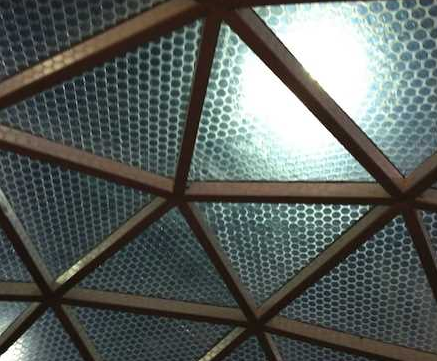
SolaWrap greenhouse film's magic lies within the unique bubble design. This bubble design allows for a full year-round production at a fraction of the cost of traditional greenhouse films.  83% of sunlight diffuses through more than 100 air bubbles per square feet. This gives your plants 30% of healthy infrared light. This even diffusion avoids shading and burning areas. The results are faster growing, healthy plants.

If you would like to receive a comparison chart showing the values for various greenhouse covers, please click the blue box below.

Comparison Chart for Greenhouse Covers

HAPPY GROWING!

Click for pricing/ info Search for Greenhouse Plastic, tapes, fire retardant films, plastic sheeting Home page www.globalplasticsheeting.com plastic sheeting, tapes, strapping fire retardant films greenhouse plastic Free SolaWrap Sample Greenhouse Plastic. Call 760 597 9298


Tags: Greenhouse Covers

Radon-Resistant New Construction- What is it?

Posted by Nana Hinsley on Thu, Jun 12, 2014 @ 02:56

So often new home buyers make the assumption that the brand new construction home they are buying protects them from radon. That assumption could be further from the truth.  Consider buying a home from a home builder that build radon-resistant new construction homes!

Block Radon from your home

More and more home builders across the United States are building new homes that prevent radon from entering the home. Home builder's have come to realize that their customers need a safer, healthier, radon-resistant home.  The EPA has launched a campaign that promotes the concept that living green is also breathing clean, healthy indoor air. It is environmentally responsible to chose to protect familys' from lung cancer.

What's the big deal about radon? Radon is extremely dangerous because it is odorless and an invisible gas that ranks as the number one home hazards for American homes, according to a Harvard University study. While radon dissipates outside in an open air environment, it gets trapped inside homes and buildings. Hazardous radon levels are detected in one out of 15 American homes. Radon is the leading cause of lung cancer for non-smokers.  The U.S. surgeon General has made January "Radon Action Month".

If you are buying an older home you can hire a radon professional to do an inspection. Find certified professionals with the National Environmental Health Association-National Radon Proficiency Program or the National Radon Safety Board.

Let's see how much you know about Radon! Answer these True or False questions.

  1. Radon levels within a building often change on a day-to-day basis. (True or False)  True: Because of changes and air pressure through-out the building during different times of the year Radon levels in the home can increase or decrease
  2. The highest indoor levels are often found during the winter when you are using heat to warm your home. (True or False) True: This is because during the winter months most homes windows and doors are closed with a thus creating for lack of air flow trapping Radon and other natural occurring gases inside the home.
  3. Short term test kits are the quickest way to test your home for radon. (True or False) True: They will give you a quick reading, but reading over time are more reliable.
  4. 24 hours is enough time to determine if your home has a radon problem.  (True or False)  False: You need at least 48 hours at a minimum.
  5. There are long term tests that remain in your home for more than 90 days, and are more effective than short term tests. (True or False) True because radon levels vary depending on the weather, etc.
  6. If a long-term test yield results of 4pCi/L or higher, the EPA recommends correcting the problem.  (True or False) True
  7. The best place to test for radon is n the lowest part of the home. (True or False) True:  Because Radon is a natural occurring gas created by decomposing Uranium underground the highest amounts of Radon Gases enter your home would be coming from the lowest point.
  8. It is smart to also test rooms that are regularly occupied such as a family room, den, etc.  (True or False) True- It's important to be safel in your whole house.

So you live in a state that has statewide Radon-Resistant New Construction- RRNC Codes? As of June, 2014, the EPA list the following states: Illinois | Maryland | Michigan | Minnesota | New Jersey | Oregon | Washington.

There are 18 states that DO NOT have statewide RRNC codes, but DO have local jurisdictions that have RRNC codes. They are:  Alabama | Colorado | Idaho | Iowa | Kansas | Missouri | Montana | NebraskaNew Mexico | New York | Ohio | Oklahoma | Pennsylvania | South Carolina | Tennessee | West Virginia | Wisconsin | Wyoming

There are 24 states and 3 District/Territories that DO NOT have statewide or local jurisdictions that have RRNC codes. They are:  AK, AZ, AR, CA, CT, DE, DC, GA, GU, HI, IN, KY, LA, MA, MS, NV, NH, NC, ND, PR, SD, TX, UT and VT.

What are some of the things a builder should do to make a Radon-Resistant New Construction home?

1.  GRAVEL:  A layer of clean, coarse gravel below the foundation.

2.  Plastic Sheeting or Vapor Retarder: A heavy duty plastic sheeting or vapor retarder over the gravel to inhibit radon and other soil gases from entering the home. What is the best vapor barrrier that is specifically engineered to block radon, and has the tests to prove it? Raven Industries  VaporBlock 20+. This vapor retarder/barrier far exceeds any 6 mil polyethylene plastic.

3. A Vent Pipe:  A vent pipe installed vertically from the gravel layer through the house's conditioned space and roof.  This safely vents radon and other soil gases outside hte hosue.

4. Sealing and Calking: Sealed all openings, creacks and crevices in the concrete foundation and walls with polyurethane caulk to prevent radon and other soil gases from entering the home.

5. Junction Box:  Installed an electrical junction box (outlet) in the attic for use with a vent fan, should, after tesing for radon, an more robust system be needed.


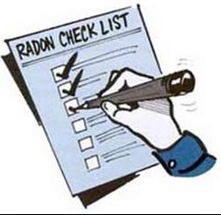
RRNC check list radon


Check out the EPA's website to learn more about controlling radon in your home.


Tags: RRNC, Radon in new homes

Crawl Space Vapor Barriers to Protect Your Health and Your Home

Posted by Andrew Cooper on Mon, Mar 10, 2014 @ 04:58

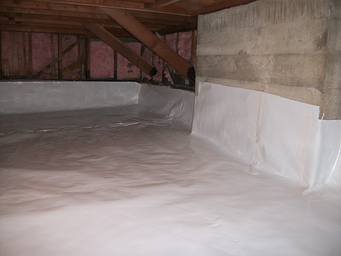
Crawl space vapor barriers that look like a roll of regular old plastic sheeting aren’t something that people don’t generally discuss at backyard barbecues! For most home owners, the thought of buying plastic sheeting only comes to mind when they about ready to start that long awaited home improvement project and they want to protect their floors, furniture, counter tops and other valuable things around the house.  One thing that never really comes to mind is buying plastic  sheeting also called, crawl space vapor barriers, to protect the most important thing in their home; their health.

True or False:  The Surgeon General has warned that smoking is the second leading cause of lung cancer in the United States today.   (False- radon is the second leading cause of lung cancer in the U.S. today).

Every day tiny radioactive radon gas molecules migrate through many homes across the county. Depending on what part of the country you live in really makes a difference.  Unfortunately we can’t smell, taste or know that those stealth radon gas molecules can be causing long term health problems for us.  Radon is a cancer causing radioactive gas that naturally occurs from uranium deposits decomposing in the ground.  The Surgeon General has warned that radon is the second leading cause of lung cancer in the United States today. http://www.surgeongeneral.gov/news/2005/01/sg01132005.html  The U.S. Environmental Protection Agency and the Surgeon General’s Office have estimated that as many as 20,000 lung cancer deaths are caused each year by radon.


True or false:  An elementary school student that spends 8 hours per day and 180 days per year in a classroom with 4 pCi/l of radon will receive nearly 10 times as much radiation as the Nuclear Regulatory Commission allows at the edge of a nuclear power plant.                         (true)

Most U.S. EPA lifetime safety standards for carcinogens are established based on a 1 in 100,000 risk of death.

True or False:  Most scientists agree that the risk of death for radon at 4 pCi/l is approximately 1 in 100.

(True)

So what can you do to protect your home from Radon gas? First of all you should test your home to see if you have high levels of radon.  The US EPA, Surgeon General, American Lung Association, American Medical Association, and National Safety Council recommend testing your home for radon because testing is the only way to know your home's radon levels. There are no immediate symptoms that will alert you to the presence of radon. It typically takes years of exposure before any problems surface.

Is there a crawl space vapor barrier that can combat deadly radon?

For many years homeowners and contractors alike have chosen to just use 6 mil plastic from the local hardware store with a radon mitigation system that blows the gas away from the home to lower radon levels.  However, what most people don’t know is that is not all crawl space vapor barriers  are equal and that the plastic sheeting liner they bought from the their local hardware store or that the contractor is not meant to block out any type of gases.  Over time the radon gas that is not being vented out will slowly build back up in your home.

Ask to see data sheet on the plastic.

Look for Radon Diffusion Coefficient test data on the data sheet. (If this is not listed then the product has not been tested to block out radon)

Also stand firm.  Don’t let anyone talk to you into something you know isn’t right.  Remember it does not matter how much experience a company says they have with mitigating Radon. You must insist on seeing the data sheet. When it comes to your health you must use the crawl space vapor barrier that is proven to block those hazardous gases.

Tap For Pricing & Info (619) 448-4439

Tags: Radon Vapor Barrier, crawl space vapor barrier