Plastic Sheeting Blog. Click on Home for all our product categories...

Crawl Space Vapor Barriers- how do you pick one?

Posted by Nana Hinsley on Tue, Jul 09, 2013 @ 02:56

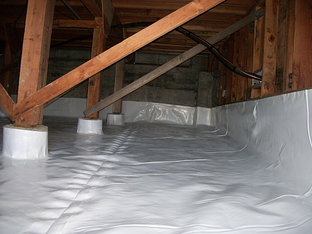
Crawl space vapor barriers also referred to as vapor retarders or more accurately-vapor diffusion retarders come with different characteristics to suit the application they are protecting.  There are a few fundamental questions that need to be answered so the most appropriate vapor barrier can be selected for the job.

Crawl space vapor barrier

One of the most important questions that arise is whether the home is in an area that has radon or methane gas coming up through the ground. This is critical because radon gas decays into radioactive particles that can get trapped in your lungs when you breathe. This means your lung tissue can be damaged leading to lung cancer over the course of your lifetime. Knowing if you have radon gas in your home will help you decide on buying a crawl space vapor barrier that block deadly radon gas. 

The next consideration is the surface to which you are laying the crawlspace vapor barrier (vapor diffusion retarder) upon.  It is rocky with sharp rocks, then you need a liner that won't puncture when it comes in contact with the soil. Thicker material will give the crawl space vapor barrier more strength to hold up to that type of surface.

How will you be using the space where you place the vapor diffusion retarder? If it is a crawlspace that is used for storage- or where people will be walking, then again you will want an 18 mil liner that has some brawn.

Tap For Pricing & Info (619) 448-4439

Tags: crawl space vapor barrier, vapor diffusion retarders

A Plastic Sheet called Correx

Posted by Nana Hinsley on Thu, Jun 20, 2013 @ 03:02

Looking for something a little bit more rigid than flexible plastic sheeting?  Here you go...CORREX!  Correx is the most versitile product to use for a multitude of applications. Correx is a very lightweight, yet strong and durable.  It is made with a twin wall polypropylene sheet material. It is often referred to as corrigated.  It is non-toxic, chemically inert, and can be printed on. It can be used for surface protection, or made into boxes, trays, dividers and so much more. It is often used to protect hard wood flooring from heavy equipment passing over it.  Some people liken it to plastic cardboard!   It can be manufactured in 2mm and thicker.

Correx is very easy to work with. Since it is so lightweight and easy to handle, consumers often cut it with scissors or a knife to fit their needs.  It is both water and chemical resistant!  It can be fire retardant, and can be made anti-static with U.V. stabilizers to extend its life when out doors. 

Click here if you would like to learn more about this wonderful product.

Tap For Pricing & Info (619) 448-4439


Tags: Correx, fluted plastic, corregated plastic

Plastic Sheeting Called, LLDPE

Posted by Nana Hinsley on Thu, Jun 13, 2013 @ 01:29

The plastic sheeting liner referred to as LLDPE stands for Linear Low Density Polyethylene. It is a very flexible plastic sheeting product.  It is used for making plastic wrap, container lids, toys and stretch wrap. An example in the surface protection arena is carpet plastic.  LLDPE plastic sheeting is a perfect product to use because the film ca be made very thin (3 mil) and it will still retain amazing strength. Because of its stretching capabilities, it is difficult to puncture.

LLDPE plastic sheeting can have additives added to it to enhance it's purpose. For example, fire retardant  additive can be added so that the film is fire retardant.  UV additives can also be added to the film with hold up under the sun.  The sun's UV rays are a common enemy to polyethylene plastic sheeting. Think of plastic sheeting you see on mounds of dirt that is flapping in the wind. It is usually torn to shreds thanks to sun damage.

If you would like to see a variety of plastic sheeting products made from LLDPE, click here.

Tap For Pricing & Info (619) 448-4439

Tags: Plastic sheeting called LLDPE

Plastic Sheeting is known by many names...

Posted by Nana Hinsley on Fri, May 31, 2013 @ 09:07

Plastic sheeting is a general term that is a catch all phrase for many terms in the industry.  Plastic sheeting's other names are: liners, vapor barriers, vapor retarders, films, polyethylene sheeting. poly sheeting, visqueen, plastic film, reinforced plastic, self-adhesive films, tarps, root barriers, underlayments, greenhouse films, plastic covering, and so on. Plastic sheeting is often made from polyethylene film as its main ingredient.  Other additives can be added to it.

The beauty of plastic sheeting is the various ways it can be manufactured to best serve the application it is intended for. Below are some examples of the varieties of plastic sheeting. The highlighted terms will link you to the website with these products.

Fire retardant plasticFire Retardant: Plastic sheeting can be made to be fire retardant.  Fire retardant additives are added to the plastic so that it does not burn when it is exposed to flames.  That is not to say the plastic sheeting won't melt, but it won't add to the fire source. Fire retardant plastic is very popular in aerospace, maritime, museums, haunted houses, and events that need plastic sheeting where people will be involved. Most often the fire marshal will require proof in the way of documentation that the plastic sheeting is indeed fire retardant when it comes to using it for public events.

Sticky Plastic self adhesiveSelf Adhesive:  When construction work is being done, it is very efficient to have self-adhesive plastic sheeting covering a variety of surfaces. Carpeting, counters, windows, flooring, doors and more can be covered with self-adhesive plastic sheeting to protect the surface from damage.  These surface protection films have a self adhesive coating on one side, and not on the other.  The film sticks to the surface and holds it in place until it is time to remove it. A 3 mil film will very successfully protect the surfaces.  With carpeting, a woman can wear high stilleto heels and not puncture the plastic.  Carpet plastic is very popular to protect carpeting during parties. Those wings won't hurt a thing if they fall to the floor with the red wine!
String reinforcedScrim/String Reinforced:  Polyethylene sheeting can be made in layers, with a layer of string/scim reinforcement in the plastic.  What this does is make the plastic much stonger and able to stand up to wind and harsher condtions.  It is very popular on job sites where construction curtains are made.

U.V. (Ultra Violet) Protection:  The sun deteriorates plastic in record time.  Notice the torn up black plastic on piles of dirt in an empty lot.  That plastic did not receive the UV additive to protect it from the sun's strong rays. By looking at the life expectancy of the plastic sheeting, you can determin how long it will hold up when it is exposed to the sun.

Regrind vs virgin polyethylene:  Plastic sheeting is termed, "virgin resin" when the film is 100% polyethylene. manufacturers can throw in "regrind" which is recycled plastic.  When this is done, it weakens the plastic sheeting.  In some application, it doen't matter if there is regrind. Most HDPE liners are virgin polyethylen because the application that need that type of plastic, need a strong dependable liner to do the work. 

Harmful Gas Blockers:  Some plastic sheeting is specifically designed to block out harmful VOC's  such as Radon, Methane, and the like.  The cell structure in these films are so small that these gases cannot pass through. This same plastic sheeting blocks moisture transmission.

Vapor Retarders:  Water from the earth looks for ways to rise to the surface.  Many buildings today use vapor barriers (vapor retarders) to retard the moisture migration through concrete slabs and concrete walls thus protecting the structure.

Textured plastic sheetingTextured Plastic Sheeting:  Some applications want a little grip on the plastic sheeting, so people won't slip and fall should the plastic get wet.  Texturing is a nice way to accomplish this.  There are several films that have texture specifically for this purpose.

This is just a very small sample of the types of plastic sheeting products that exist. For more information please look through our website, or give us a call (619) 448-4439. We love to talk about plastic!


Tap For Pricing & Info (619) 448-4439

Search for Greenhouse Plastic, tapes, fire retardant films, plastic sheeting


Tags: plastic sheeting

Roofing Underlayments- The Emergence of Synthetics

Posted by Nana Hinsley on Fri, May 03, 2013 @ 09:26

Way back in the day, say 5000 years ago, clay was the material of choice to make roofing.  Even back then, clay roof tiles were applauded for their ability to resist fire. One of the prevailing problems was the weight of the tiles.  To transport them from city to city was a lot of work among other things.

As time went on, composit shingles were invented. They were made from felted or woven fabric was was covered with a tar-like substance. This brought the rise of the asphalt shingle. These were popular due to their higher flame-resistance ability, and the fact they could be shaped into various patterns and forms. The ashalt shingles replaced wood shingles that while light weight, were a fire hazzard. 

Coal tar became the technology that was used to seal the roof from water, UV rays and air borne chemicals. Felt was adhered to the roof using hot-applied coal tar pitch. So many of us can still remember the smell of the tar fumes from a roofing job.

Underlayment roofing

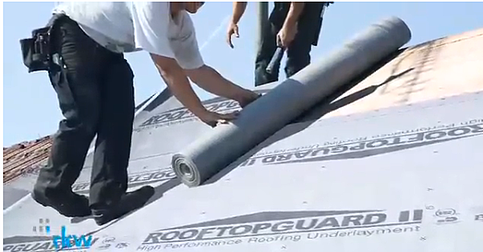
Today we have the emergence of Synthetic Underlayments. They were introduced approximately 13 years ago.  The felt underlayment that was used for so many years had so many shortcomings. One of the biggest shortcoming being that asphalt saturated felt paper underlayment is that it is not water-proof.  The two available thicknesses is 15 pound and 30 pound.  The thirty-pound is more resistant to damage during installation, but is heavier and a lot more difficult to work with.  It still does not address the fact that it isn't water proof.

Roofing underlayment

Synthetic Underlayments are generally made from a 3 ply construction of polyethylene/polypropylene over a woven substrate.  Most but not all synthetic underlayments are impermeable to both water and vapor. Asphalt felts are good at shedding water and are semi-permeable.

Synthetic underlayments are more tear-and pucnture-resistant than asphalt felts.  Synthetic underlayments resist expansion and contraction with the varying temperature changes that occur daily.  Most have a Ultra Violet coating which means they won't degrade in the sun.

Synthetic underlayments are lighter than felts.  For installers, this significantly makes installation quicker and easier. The synthetic products are more flexible on cold weather, and roll out without cracking or chatter.  If you live in a colder climate, this extends your installation season.

Another favorable factor is that synthetic underlayments outperform felts. They aren't likely to leak, even if a few shingles crack or blow off. they don't absorb moisture, so they can't rot or dry out.  The also won't allow for mold or mildew growth.

To learn more about sythetic roofing underlayment, please click here and visit our product page.

Tap For Pricing & Info (619) 448-4439

Tags: Roofing underlayment, syntheict roofing underlayment

Plastic Sheet/Sheeting- What types exist?

Posted by Nana Hinsley on Mon, Apr 15, 2013 @ 12:07

Plastic sheet (sheeting) comes in a variety of compositions which vastly affect the nature of the plastic.  Plastic is one of the most versitile products that is used in many aspects of daily life. From car parts, to children's toys, water bottles, televisions and now aircraft, plastic is molded into plastic sheets, parts, and gagets. Plastic is the chosen  material because it can meet so many consumer needs at a respectable price.

Today's plastic sheets are here to meet consumer needs for health, safety and performance with value.  Take a milk bottle. Once stored in glass bottles, a container of milk was heavy, and shattered into a million pieces if it was dropped.  The plastic milk bottle allows the drinker to easly lift the bottle, and feel assured that if they drop it, it won't be too much a a calamity.

The properties of plastics/plastic sheeting are defined by the organic chemistry of the polymer such as the density, hardness, resitance to heat, organic solvents, oxidation and ionizing radiation. Due to plastic's insolubility in water and relative chemical inertness, pure plastic has a low toxicty.  Keep in mind that the additives that can be added to plastic could be toxic. An example of an additive is the plasticizers that when added to  brittle plastics like polyvinyl choloride, it makes it pliable enough for use in food packaging. It's the effects of such leachates that concern the public regarding food consumption.

To illustrate the types of common plastic and their uses, here is a list taken from Wikipedia.

  • Polyester (PES) – Fibers, textiles.
  • Polyethylene terephthalate (PET) – Carbonated drinks bottles, peanut butter jars, plastic film, microwavable packaging.
  • Polyethylene (PE) – Wide range of inexpensive uses including supermarket bags, plastic bottles.
  • High-density polyethylene (HDPE) – Detergent bottles, milk jugs, and molded plastic cases.
  • Polyvinyl chloride (PVC) – Plumbing pipes and guttering, shower curtains, window frames, flooring.
  • Polyvinylidene chloride (PVDC) (Saran) – Food packaging.
  • Low-density polyethylene (LDPE) – Outdoor furniture, siding, floor tiles, shower curtains, clamshell packaging.
  • Polypropylene (PP) – Bottle caps, drinking straws, yogurt containers, appliances, car fenders (bumpers), plastic pressure pipe systems.
  • Polystyrene (PS) – Packaging foam/"peanuts", food containers, plastic tableware, disposable cups, plates, cutlery, CD and cassette boxes.
  • High impact polystyrene (HIPS) -: Refrigerator liners, food packaging, vending cups.
  • Polyamides (PA) (Nylons) – Fibers, toothbrush bristles, tubing, fishing line, low strength machine parts: under-the-hood car engine parts or gun frames.
  • Acrylonitrile butadiene styrene (ABS) – Electronic equipment cases (e.g., computer monitors, printers, keyboards), drainage pipe.
  • Polyethylene/Acrylonitrile Butadiene Styrene (PE/ABS) – A slippery blend of PE and ABS used in low-duty dry bearings.
  • Polycarbonate (PC) – Compact discs, eyeglasses, riot shields, security windows, traffic lights, lenses.
  • Polycarbonate/Acrylonitrile Butadiene Styrene (PC/ABS) – A blend of PC and ABS that creates a stronger plastic. Used in car interior and exterior parts, and mobile phone bodies.
  • Polyurethanes (PU) – Cushioning foams, thermal insulation foams, surface coatings, printing rollers (Currently 6th or 7th most commonly used plastic material, for instance the most commonly used plastic in cars).

More Specialized plastics are listed below, thanks to Wikipedia.

  • Melamine formaldehyde (MF) – One of the aminoplasts, and used as a multi-colorable alternative to phenolics, for instance in moldings (e.g., break-resistance alternatives to ceramic cups, plates and bowls for children) and the decorated top surface layer of the paper laminates (e.g., Formica).
  • Plastarch material – Biodegradable and heat resistant, thermoplastic composed of modified corn starch.
  • Phenolics (PF) or (phenol formaldehydes) – High modulus, relatively heat resistant, and excellent fire resistant polymer. Used for insulating parts in electrical fixtures, paper laminated products (e.g., Formica), thermally insulation foams. It is a thermosetting plastic, with the familiar trade name Bakelite, that can be molded by heat and pressure when mixed with a filler-like wood flour or can be cast in its unfilled liquid form or cast as foam (e.g., Oasis). Problems include the probability of moldings naturally being dark colors (red, green, brown), and as thermoset it is difficult to recycle.
  • Polyetheretherketone (PEEK) – Strong, chemical- and heat-resistant thermoplastic, biocompatibility allows for use in medical implant applications, aerospace moldings. One of the most expensive commercial polymers.
  • Polyetherimide (PEI) (Ultem) – A high temperature, chemically stable polymer that does not crystallize.
  • Polylactic acid (PLA) – A biodegradable, thermoplastic found converted into a variety of aliphatic polyesters derived from lactic acid which in turn can be made by fermentation of various agricultural products such as corn starch, once made from dairy products.
  • Polymethyl methacrylate (PMMA) – Contact lenses (of the original "hard" variety), glazing (best known in this form by its various trade names around the world; e.g., Perspex, Oroglas, Plexiglas), aglets, fluorescent light diffusers, rear light covers for vehicles. It forms the basis of artistic and commercial acrylic paints when suspended in water with the use of other agents.
  • Polytetrafluoroethylene (PTFE) – Heat-resistant, low-friction coatings, used in things like non-stick surfaces for frying pans, plumber's tape and water slides. It is more commonly known as Teflon.
  • Urea-formaldehyde (UF) – One of the aminoplasts and used as a multi-colorable alternative to phenolics. Used as a wood adhesive (for plywood, chipboard, hardboard) and electrical switch housings.

So thanks to it's name "Plastic" which comes from the Greek meaning "capable of being shaped or molded", plastic has played an integral part in life as we know it today.

Tap For Pricing & Info (619) 448-4439


Tags: plastic sheeting, Plastic sheet

Plastic Sheeting that has bubbles that's not bubble wrap?

Posted by Nana Hinsley on Thu, Apr 11, 2013 @ 01:25

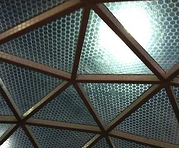
Plastic sheeting and greenhouse plastic applications are forever changing and morphing!  Take greenhouse films for example!  The latest greatest way to cover your greenhouse is with Polydress Solawrap.  Polydress Solawrap is changing the way growers are covering their greenhouses. This polyethylene plastic sheeting is filled with thousands of little air-filled bubbles. This design has proven itself in Europe for the last thirty years!  Solawraps air bubble design has led to reported tomato crop advancement in the Mediterranean of three weeks, in wintertime, in an unheated greenhouse compared to standard greenhouse coverings. This unique bubble filled plastic sheeting was tested in the unforeboding heat of Kuwait for 25 years.  In those 25 years this amazing plastic sheeting now named Solawrap withstood the elements and did not become brittle or streak. 

If you are wondering what adding air bubbles can do to sheets of plastic, understand that Solawrap comprises 3 layers of polyethylene film that encloses those air bubbles.  This is what gives Solawrap the remarkable R-value of 1.7.  This same air bubble filled plastic sheeting allows for 83% transparency of sunlight while diffusing 83% of the light. With increased amount of light diffusion plants grow healthier and faster. Normally in the summer many thousands of dollars are spent on shade cloth, however, in Europe, due to the high diffusion rates, only 10% of SolaWrap greenhouses utilizes shade cloths.

Polydress Solawrap

If you would like to learn more about Polydress Solawrap- the air bubble filled plastic sheeting miracle, click here.  You may also ask for samples from our contact us page. 

 Tap For Pricing & Info (619) 448-4439


Tags: plastic sheeting, Solawrap, Polydress Solawrap, greenhouse covering

Thickness of Plastic Sheeting- How thick is....?

Posted by Nana Hinsley on Tue, Mar 26, 2013 @ 11:25

So often people want to get an idea of how thick a certain thickness of plastic sheeting is. We hope this article will help you understand. 

Plastic sheeting's thickness is measured in mils.  The bigger the number of mils, the thicker the plastic sheeting.  Here are some approximations with common items to help you understand.

Four (4) mil plastic sheeting is about as thick as a piece of paper.

Six (6) mil plastic sheeting is what your trashbags are made from in your kitchen.

Ten (10) mil plastic sheeting is what your business card is often made from.

Fifty (50) mil is the thickness of a dime.

Sixty (60) mil plastic sheeting is the thickness of a penny.

Seventy Five (75) mil plastic sheeting is the thickness of a nickel. For simplicity here is a chart below.

Thickness of Plastic Sheeting              Common item for Comparison

75 mil                                                                 Nickel

60 mil                                                                 Penny

50 mil                                                                 Dime

10 mil                                                                 Business card

6 mil                                                      white trash bag used in kitchens

4 mil                                                             standard piece of paper

Not all plastic sheeting has the same tensile strength if it is the same thickness. Take skrim reinforced (string reinforced) plastic sheeting.  The layer of string or cord that is manufactured into the plastic give the plastic a great deal more strength and durability.  Depending on the application, one can select the most appropriate type of plastic sheeting to do the job.

Additives added to the plastic sheeting also affect how long the plastic will last. Plastic sheeting that has a U.V. additive added will hold up in the sunshine a lot longer than a piece of plastic that is the same mil thickness without the U.V. additive. Another common additive is the fire retardant additive.  In a fire, two sheets of plastic of the same mil thickness will withstand the flame differently. The fire retardant plastic sheeting will not burn. The flame will extinguish. The non-treated plastic sheeting will go up in flame, right quick and in a hurry!!

When you are deciding on how thick you want the plastic sheeting to be, also consider the additives that will give it added benefits.  Still can't decide? Give a quick call and we will give you your options to best suite your needs.

Tap For Pricing & Info (619) 448-4439

Tags: thickness of plastic sheeting, plastic sheeting comparisons

Extraordinary Greenhouse Film- Polydress Sola Wrap!

Posted by Nana Hinsley on Mon, Mar 04, 2013 @ 09:19

SolaWrap greenhouse film is revolutionary in that it saves energy, offers UV protection, durability with transparency and extends the growing season. The unique bubble design is what allows Polydress Sola Wrap the capability to allow for year-round production at a fraction of the cost of traditional greenhouse films. Known in Europe as LP Keder or Polydress, Polydress Sola Wrap is now available in  U. S markets.  It's an insulated film that withstands the most extreme climates.  Sola Wrap has a track record for over 40 years of testing in the Swiss Alps, the Middle East, and across Europe. Sola Wrap provides an insulating effect that retains up to 95% of heat radiation while providing an R-value of 1.7. This energy savings is significant! 

SolaWrap guarantees an even light diffusion over the entire greenhouse.  83% of sunlight diffuses through more than 100 air burls per square foot.  30% is healthy infrared light.  This even diffusion spreads evenly thus avoiding shading and burning areas.  The results are faster growing, healthy plants

SolaWrap has a 10-year warranty against UV degradation. For over 40 years, this product has not deteriorated, changed color, become foggy or streaky. Used as greenhouse roofing or walls, Sola Wrap is waterproof, and airtight. It has withstood hailstorms, snowstorms, hurricane winds and both hot and cold snaps. Customers report picking strawberries inside the balmy greenhouse, while the temperatures outside are negative 30 degrees Celsius.  This same greenhouse withstood snows, 70 mile-per-hour winds and violent hailstorms.

Installation: SolaWrap is a flexible polyethylene film that is easily cut with a knife or scissors, and is completely recyclable and can be safely incinerated. 

Roll Size:  Rolls come in 4', 5' and 6' widths by 328' long. 

Tap For Pricing & Info (619) 448-4439

Tags: Greenhouse film, Sola Wrap, Polydress Sola Wrap

Do-It-Yourself Backyard Ice Rink Made Easy!

Posted by Nana Hinsley on Thu, Nov 08, 2012 @ 01:50

Hockey rink

 A Do-It-Yourself Backyard ice rink is do-able! After all, a backyard ice rink is the hit of the neighborhood when you are a child (maybe as an adult too)!  The thought of building it at the same time can seem like a lot of work.  Our customers have asked us for ways to make the construction of the ice rink easier and faster. 

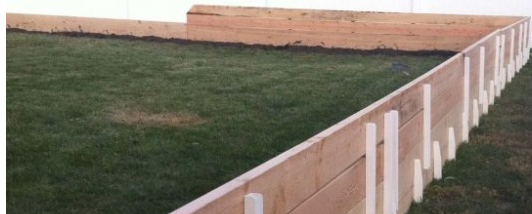
In addition to the ice rink liners, we offer is an ice rink framing systemthat has all the brackets, corner bracing and stakes that are engineered specifically for building a sturdy, well constructed ice rink. It is called “Iron Sleek”. Water weighs A LOT, and if you don’t have a strong framework in place, your ice rink will fail. With Iron Sleek  all you will need are the tools and lumber to make the frame, and quality plastic sheeting (ice rink liner) to hold the water for the ice rink.

Location, Location, Location:  Just as they say in real estate that location is key to the success of a business, location can make or break your ice rink. If you have a lot of slope in your yard,this could be problematic. Remember that water is heavy, and your boards will have to hold the weight of the water. Plus, anything over 18" and it won't hold the water. Therefore, it is important to find the most level area of your yard that is relatively dry, and has solid soil. The greater the slope, the more bracing and lumber  you will need to support the weight of the water. At the same time you will need approximately 5 cm of ice to support the weight of skaters.

Start Early before the season is upon you! Pounding stakes into frozen ground is no easy task!  Start your back yard ice rink before the ground freezes. Ideally the middle part of November and into early December is a good choice.

Iron Sleek framing for ice rink 

With the Iron Sleek, just follow the directions on how to lay out the lumber and secure the brackets to get the frame built.  The instructions will explain how far you need to place the brackets depending on the size of your rink.

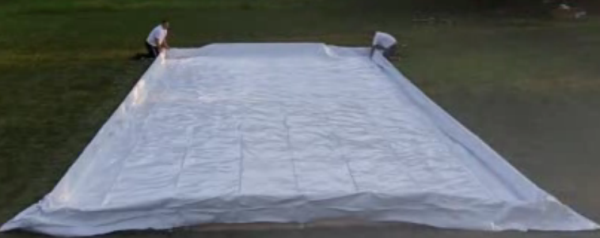
ice rink liner

Liner Placement:  Ideally you will want to place your liner within the frame the same time you fill the rink with water.  Look for weather temperatures in the 20 degree range at night, and 32 degrees maximum during the day.  You will want the ice rink liner to be nicely flush around the boards laying flat as the picture above illustrates. As far as the choice of liners, please click on the link below.  You will want to consider is the strength of the liner, the longevity of the liner, and the color.  Bright white is preferable because it reflects the sun and won't add heat to the rink.

Patience is a virtue! Little ones are so excited to get skating when you fill your rink.  It is important to give the rink PLENTY of time to harden before the skating begins. If you skate before it is frozen, the ice will break, and your surface will be uneven! 

Owning your own backyard ice rink is a memory that will stay with everyone.  It's just so much fun for kids to run outside after school with their friends and have fun on the ice! Best of all you don't have to drive anywhere to do it!

Click here to see a variety of ice rink liners to purchase.

Click to see the backyard ice rink framing system, Iron Sleek.


Tap For Pricing & Info (619) 448-4439

Tags: Iron Sleek, Ice rink framing sytem