Plastic Sheeting Blog. Click on Home for all our product categories...

Global Plastic Sheeting

Recent Posts

HDPE Liners for Golf Course Ponds: Your Guide to Affordability & Performance

Posted by Global Plastic Sheeting on Tue, Jun 11, 2024 @ 02:30

Beyond Beauty: Unveiling the Purpose of Golf Course Ponds 

Sparkling ponds nestled amidst manicured greens are a signature feature of any golf course. But these picturesque additions are more than just a pretty face. Let's delve into the fascinating world of golf course ponds, exploring their purpose, considerations, and why HDPE liners are a popular choice for creating these watery wonders.

Why Do Golf Courses Have Ponds?

Golf course ponds serve a multitude of purposes, both aesthetic and functional:

  • Visual Appeal: Ponds add a touch of tranquility and natural beauty to the golfing experience, creating a more picturesque and enjoyable environment for players.
  • Strategic Challenge: Strategically placed ponds can add an element of challenge to the game, forcing players to consider shot placement and club selection more carefully.
  • Habitat Creation: Ponds provide valuable habitat for wildlife, attracting birds, fish, and other creatures, contributing to the overall biodiversity of the golf course.
  • Water Management: Ponds act as a collection point for stormwater runoff, helping to control flooding and prevent erosion during heavy rains. The collected water can also be used for irrigation purposes in drier seasons.
  • Drainage and Aesthetics: Ponds can be strategically placed to improve drainage on the course, removing excess water from low-lying areas while maintaining a visually pleasing landscape.

Things to Consider Before Building a Golf Course Pond:

Building a golf course pond requires careful planning and consideration of several factors:

  • Size and Location: The size and location of the pond will depend on the course's design, desired aesthetics, and functionality. Ponds should be positioned to enhance the playing experience and minimize disruption to the flow of the game.
  • Permits and Regulations: Local regulations regarding water usage and environmental impact need to be addressed before construction begins. Obtaining necessary permits is crucial.
  • Liner Selection: Choosing the right liner material is essential for ensuring the pond's longevity and functionality. Factors like water depth, desired lifespan, and budget need to be considered.
  • Maintenance: Golf course ponds require ongoing maintenance to maintain water quality, prevent algae growth, and ensure the overall health of the pond ecosystem.

HDPE Liners: An Affordable and Effective Solution

Among various pond liner options, HDPE (High-Density Polyethylene) liners offer a compelling combination of affordability and functionality:

  • Cost-Effective: HDPE liners are a more budget-friendly option compared to some other liner materials. This is especially important for large-scale projects like golf course ponds.
  • Durability: HDPE liners are known for their impressive durability, offering a long lifespan and requiring minimal maintenance over time.
  • Impermeability: HDPE provides excellent water retention, minimizing water loss through seepage and ensuring the pond remains functional.
  • Versatility: HDPE liners are available in various thicknesses and sizes, allowing for customization to suit the specific needs of each golf course pond.

The Final Tee: A Balancing Act

Golf course ponds add a touch of beauty and challenge to the game, while also playing a crucial role in environmental management. HDPE liners offer a cost-effective and reliable solution for creating these watery features. By carefully considering all factors, golf course designers can ensure their ponds not only enhance the golfing experience but also contribute to a sustainable and beautiful course environment.

Tap For Pricing & Info (619) 448-4439

Tags: Golf course ponds

Irrigation Ponds: The Backbone of Agriculture

Posted by Global Plastic Sheeting on Tue, Jun 11, 2024 @ 01:17

Beyond Clay & Concrete: Why HDPE Liners Rule in Modern Irrigation Ponds

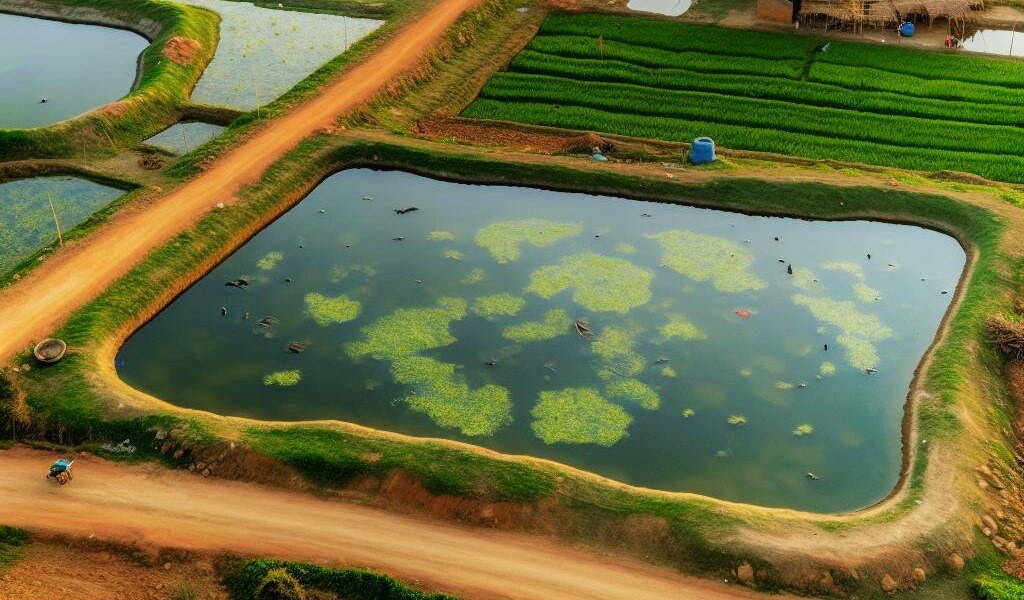
A large, rectangular irrigation pond lined with a black HDPE liner, surrounded by lush green farmland in the background.

Have you ever driven past vast fields and spotted large bodies of water dotting the landscape? Those are irrigation ponds, playing a vital role in ensuring a steady supply of water for crops. Let's dive deeper and explore the purpose of irrigation ponds and why HDPE liners are a reliable solution for these essential agricultural features.

What Exactly are Irrigation Ponds?

Irrigation ponds are man-made reservoirs specifically designed to store water for agricultural purposes. Farmers draw water from these ponds to irrigate their crops, ensuring optimal growth and yield. The size of irrigation ponds can vary greatly depending on the farm's water needs and total land area.

Traditional Pond Liners: Here's Why They Fall Short

Traditionally, clay and concrete were common choices for lining irrigation ponds. However, these materials come with limitations that can hinder their effectiveness:

  • Clay Liners: While appearing cost-effective initially, clay can be problematic:

    • Permeability Issues: Unless compacted perfectly, clay liners can allow water to seep through, leading to water loss and reduced efficiency.
    • Maintenance Headaches: Clay liners are susceptible to cracking and erosion, especially in areas with freeze-thaw cycles. Constant maintenance is required to maintain their integrity.
    • Labor-Intensive Installation: Achieving a uniform and compacted clay layer is a labor-intensive process demanding professional expertise to prevent future leaks.
  • Concrete Liners: Concrete offers a reputation for durability, but it's not without drawbacks:

    • Prone to Cracking: Concrete liners are susceptible to cracking over time, especially due to ground settling and fluctuating weather conditions. These cracks can lead to water loss and require repairs.
    • Costly Investment: The installation and repair of concrete liners can be significantly more expensive compared to other lining materials.
    • Limited Design Flexibility: Concrete's rigid nature restricts design options for ponds with specific shapes or sizes.

HDPE Liners: A Modern Solution for Irrigation Ponds

High-Density Polyethylene (HDPE) liners have emerged as a superior alternative to traditional pond liners for irrigation ponds, offering several advantages:

  • Superior Impermeability: HDPE liners are virtually impermeable, preventing water loss through seepage and ensuring optimal water storage for irrigation needs.
  • Durability & Longevity: HDPE is known for its exceptional durability, withstanding harsh weather conditions and lasting for many years with minimal maintenance.
  • Cost-Effectiveness: Compared to traditional options like concrete, HDPE liners offer a more cost-effective solution in the long run, considering their lower installation and maintenance requirements.
  • Installation Versatility: HDPE liners are available in large, flexible sheets, making them adaptable to various pond shapes and sizes, allowing for more design freedom.
  • Environmentally Friendly: HDPE liners are recyclable in many cases, making them a more eco-friendly choice compared to some traditional materials.

The Bottom Line: A Sustainable Choice for Farmers

Irrigation ponds are essential for sustaining agricultural productivity. By opting for HDPE liners, farmers can ensure efficient water storage, minimize maintenance needs, and achieve long-term cost savings. In a world striving for sustainable agricultural practices, HDPE liners stand out as a reliable and eco-friendly solution for irrigation ponds, supporting the growth of healthy crops for generations to come.  To learn more call Global Plastic Sheeting.

Tap For Pricing & Info (619) 448-4439

Tags: Irrigation Ponds

Do You Need an Underlayment for Your Pond Liner? The Truth Revealed!

Posted by Global Plastic Sheeting on Tue, Jun 11, 2024 @ 11:00

Underlayment for Your Liner: Friend or Foe?

Do You Need an Underlayment for Your Pond Liner?  Call Global Plastic Sheeting  760 597 9298

Thinking about installing a pond liner or tackling a larger project involving XR-5 or HDPE geomembranes? You might be wondering if you need an extra layer of protection – an underlayment – beneath the liner itself. The answer, like many things in life, depends on a few key factors.

The Superstar Liner: XR-5 and Underlayments

XR-5 geomembranes are known for their impressive strength. The woven fabric core provides excellent puncture resistance. In most cases, an underlayment won't be necessary, especially if the subgrade (the ground beneath the liner) is smooth and free of debris. However, there are exceptions:

  • Uneven or Rocky Subgrade: If the subgrade has sharp rocks or uneven surfaces, an underlayment acts as a protective cushion, minimizing the risk of punctures during installation or from future ground movement.
  • High Traffic Areas: For applications where the liner will experience high traffic, like vehicles driving over it, an underlayment provides an extra layer of defense against potential tears.

HDPE Liners and the Underlayment Advantage

HDPE liners, while durable, can benefit more from an underlayment compared to XR-5:

  • Malleable Material: HDPE is a more flexible material than XR-5. An underlayment provides additional support and helps prevent punctures from sharp objects in the subgrade.
  • Uneven Terrain: Uneven subgrades pose a higher risk for HDPE liners. The underlayment creates a smoother surface for installation and reduces stress on the liner.

The Final Verdict: Consult the Experts

The decision of whether or not to use an underlayment ultimately depends on your specific project. Consulting with Global Plastic Sheeting or a qualified installer is crucial. They can assess your subgrade conditions, understand your application's requirements, and recommend the most suitable liner and underlayment combination to ensure optimal performance and long-lasting results for your project.

Remember, a little extra protection can go a long way in safeguarding your liner investment and ensuring its longevity.

Tap For Pricing & Info (619) 448-4439

Tags: Pond liner underlayment

What are the most common uses of HDPE liners?

Posted by Global Plastic Sheeting on Tue, Jun 11, 2024 @ 10:44

 High Density Polyethylene Liner Applications

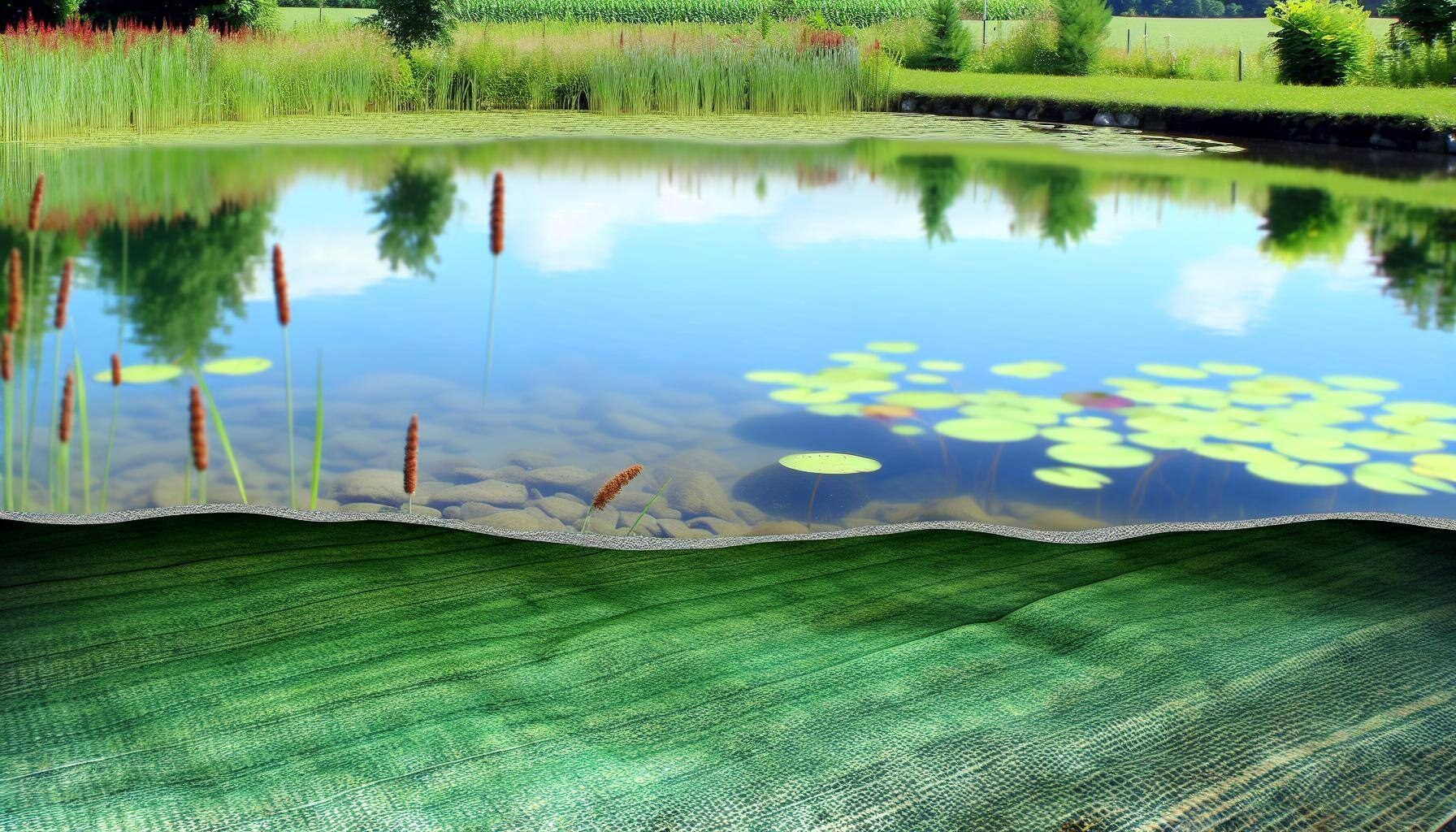
Pond Liner HDPE- Artificial pond lined with a durable HDPE liner, ideal for fish farming and irrigation.

HDPE liners, also known as High-Density Polyethylene liners, are a widely used material due to their durability, impermeability, and affordability. Here are some of the most common uses of HDPE liners:

Containment and Landfill Applications:

  • Landfill Liners: While XR-5 geomembranes offer superior chemical resistance for landfills, HDPE liners are a cost-effective option for many applications. They act as a barrier at the bottom and sides of landfills, preventing leachate (liquid waste) from contaminating the surrounding soil and groundwater.
  • Secondary Containment: Similar to XR-5, HDPE liners can be used as a secondary layer of protection around storage tanks containing hazardous materials. This captures spills and prevents environmental damage.
  • Wastewater Ponds: HDPE liners can create a barrier in wastewater ponds, ensuring proper containment during treatment. However, for applications with highly acidic or alkaline wastewater, XR-5 might be a better choice due to its superior chemical resistance.

Agriculture and Aquaculture:

  • Pond Liners: HDPE liners are a popular choice for lining ponds used for fish farming, irrigation, and ornamental purposes. They prevent water loss from seepage and create a barrier against contaminants in the soil.
  • Canal Liners: HDPE liners can be used to line canals, reducing water loss due to seepage and preventing erosion of the canal banks.

Construction and Industrial Applications:

  • Roofs and Foundations: HDPE liners can be used as waterproofing membranes for roofs and foundations, protecting structures from moisture damage.
  • Vapor Barriers: They can act as a vapor barrier in crawl spaces or under concrete slabs, preventing moisture from entering the building envelope.
  • Waste Containment: HDPE liners can be used for temporary waste containment in construction sites or industrial settings.

Other Uses:

  • Geotextiles: HDPE can be woven or used to create composite liners with geotextiles, enhancing puncture resistance and drainage properties for specific applications.
  • Erosion Control: HDPE liners can be used for erosion control on slopes or shorelines, preventing soil erosion caused by water flow.

While XR-5 geomembranes offer superior chemical resistance and some unique advantages, HDPE liners remain a popular choice due to their affordability and effectiveness in many containment, agricultural, and construction applications.

Tap For Pricing & Info (619) 448-4439

Tags: HDPE Liner Uses

XR-5 Geomembranes: Chemical Champs Compared to HDPE

Posted by Global Plastic Sheeting on Mon, Jun 10, 2024 @ 03:02

The Chemical Battlefield: Where XR-5 Geomembranes Shine

What is XR-5?

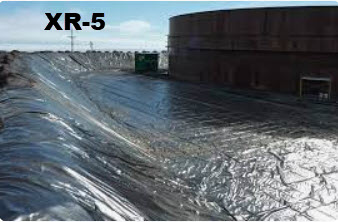
XR-5 geomembranes are a type of reinforced geomembrane liner known for their exceptional chemical resistance, durability, and flexibility.  They are used in various applications requiring containment and protection,  including landfills, fish ponds,  wastewater treatment facilities, and more. XR-5 geomembranes are a popular choice due to their superior performance compared to alternatives like HDPE (high-density polyethylene) in terms of chemical resistance, puncture resistance, and long-term lifespan.


In the realm of geomembranes, the battle against leaks and environmental contamination rages on. Two strong contenders emerge: XR-5 geomembranes and HDPE (High-Density Polyethylene). But when it comes to withstanding a chemical onslaught, XR-5 emerges victorious. Let's explore why:

  • Chemical Resistance Hall of Fame: XR-5 boasts exceptional resistance to a vast array of chemicals, including acids, alkalis, oils, and solvents. Imagine an army of XR-5 soldiers standing guard against a legion of harmful substances.
  • HDPE's Achilles Heel: While HDPE offers decent chemical resistance, it can falter against some aggressive chemicals. This chink in the armor can lead to leaks and potential environmental damage.
  • No More Leaks, No More Worries: XR-5's superior chemical resistance ensures long-lasting performance and minimal risk of leaks, even in harsh environments filled with hazardous materials.

Beyond Chemical Resistance: XR-5's Advantages

The XR-5 advantage extends beyond the chemical battlefield:

  • Puncture Resilience: The woven fabric core of XR-5 provides superior puncture resistance compared to HDPE, making it ideal for applications with sharp objects or uneven terrain.
  • Temperature Extremes: XR-5 experiences minimal size changes due to temperature fluctuations, reducing stress and the risk of tears – a key benefit over HDPE which can be more susceptible to thermal expansion and contraction.
  • Installation Advantages: XR-5 often comes in larger prefabricated panels compared to HDPE. This translates to fewer seams in the final liner, simplifying installation and reducing the risk of leaks.

The Right Tool for the Job

Choosing the right geomembrane depends on the specific project requirements. For applications demanding exceptional chemical resistance, superior puncture protection, and long-term performance, XR-5 geomembranes are the undisputed champions. They provide a robust and reliable solution for safeguarding the environment from even the most challenging chemical threats.

So, the next time you face a chemical containment challenge, remember XR-5 geomembranes – the chemical warriors ready to conquer leaks and ensure environmental safety.

Tap For Pricing & Info (619) 448-4439

Tags: XR-5 Protection

Unveiling the Environmental Powerhouse of XR-5 Geomembranes

Posted by Global Plastic Sheeting on Mon, Jun 10, 2024 @ 02:01

Environmental Protection = XR-5 Geomembrane

XR-5 Geomembranes

XR-5 geomembranes are the unsung heroes behind environmental protection. But their story goes deeper! Let's delve into the fascinating world of these powerful liners and explore what makes them truly unique.

The Science Behind XR-5's Strength:

XR-5 geomembranes are a marvel of material engineering. Their secret lies in the combination of:

  • High-Strength Woven Fabric: This core provides exceptional puncture resistance and a stable base. Imagine a super strong canvas forming the foundation.
  • Advanced Molecular Coating: This layer acts as a shield, offering exceptional impermeability to liquids and gases. Think of it as a microscopic suit of armor.

This innovative duo creates a geomembrane that's:

  • Impregnable: No matter the challenge, XR-5 stands strong against harsh chemicals, leachate, and even aggressive industrial waste.
  • Weatherproof: From scorching heat to freezing temperatures, XR-5 geomembranes are built to endure the harshest weather conditions. They're like environmental superheroes with exceptional resilience.

XR-5  Specialized Applications

XR-5 geomembranes aren't just a one-size-fits-all solution. Different grades are specifically designed to excel in various environments:

  • Potable Water Liners: Certain XR-5 grades are certified for safe contact with drinking water, making them ideal for lining reservoirs or ensuring the purity of water canals.
  • Mining & Landfill Applications: XR-5 liners excel at containing hazardous materials and preventing environmental contamination in these demanding settings.
  • Agriculture & Aquaculture: These liners create a protective barrier in ponds and lagoons, safeguarding fish and ensuring healthy crop irrigation.

The Benefits Ripple Outward

The impact of XR-5 geomembranes extends beyond their immediate applications. Here's how they contribute to a healthier planet:

  • Reduced Environmental Pollution: By effectively containing pollutants, XR-5 geomembranes prevent them from seeping into the soil and groundwater, protecting our precious resources.
  • Enhanced Sustainability: The long lifespan of XR-5 reduces the need for frequent replacements, minimizing environmental impact and resource consumption.
  • Safer Communities: XR-5 liners play a vital role in safe waste management, protecting nearby communities from potential health hazards.

The Future is Durable:

XR-5 geomembranes represent a significant advancement in environmental protection and responsible waste management. As we strive for a sustainable future, these innovative liners will continue to play a critical role in safeguarding our planet for generations to come.

Please visit the XR-5 page here

Tap For Pricing & Info (619) 448-4439

Tags: XR-5

XR-5 Geomembranes- The Toughest Liner on the Block

Posted by Global Plastic Sheeting on Mon, Jun 10, 2024 @ 02:00

XR-5- More Than Just A Geomembrane!

XR 5

Ever wondered what goes beneath those sparkling new landfills, shimmering fish farms, or even the base of your local racetrack? The answer might lie in a powerful material called XR-5 geomembrane. But what exactly is it, and why is it the hero behind so many unseen tasks?

XR-5 Geomembrane: The Superhero of Containment

Imagine a heavy-duty liner, a true champion in the fight against leaks and environmental damage. That's XR-5 geomembrane in a nutshell. It's a specially engineered material, often made from woven synthetic fabric (think a super strong canvas) that's then molecularly coated with a tough, protective layer. This creates a barrier that's:

  • Impenetrable: XR-5 geomembranes are designed to be virtually impermeable to liquids and gases. This makes them ideal for containing anything from harsh chemicals and leachate (waste liquids) in landfills to precious rainwater for irrigation.
  • Durable: These liners are built to last. They can withstand extreme weather conditions, UV radiation, and even punctures, ensuring long-term performance and environmental protection.
  • Flexible: Despite their strength, XR-5 geomembranes are surprisingly flexible. This allows them to conform to uneven surfaces and complex shapes, making them adaptable to various applications.

XR-5 in Action: Saving the Day in Different Jobs

So, where exactly do you encounter these unsung heroes? Here are just a few examples:

  • Landfills & Waste Management: XR-5 geomembranes line the base and sides of landfills, preventing harmful contaminants from seeping into the surrounding soil and groundwater.
  • Wastewater Ponds & Treatment Facilities: These liners ensure proper containment of wastewater during treatment, preventing environmental pollution.
  • Leachate Collection & Containment: XR-5 geomembranes capture leachate (liquid waste) generated in landfills, preventing it from contaminating the environment.
  • Aquaculture & Fish Ponds: They create a barrier in fish ponds, preventing contamination and ensuring the health of aquatic life.
  • Secondary Containment: These liners provide an extra layer of protection around storage tanks containing hazardous materials, preventing leaks and spills.
  • Potable Water Applications: Some XR-5 grades are specifically designed for safe contact with drinking water, making them ideal for lining reservoirs or canals.

XR-5 vs. The Competition: Why It Stands Out

While other materials like high-density polyethylene (HDPE) or PVC liners are used for similar applications, XR-5 geomembranes offer some distinct advantages:

  • Superior Chemical Resistance: XR-5 boasts exceptional resistance to a wider range of chemicals compared to some alternatives. This makes them ideal for containing harsh industrial wastes or leachate.
  • Lower Thermal Expansion & Contraction: XR-5 experiences minimal changes in size due to temperature fluctuations, reducing the risk of tears or leaks compared to some materials.
  • Stronger Puncture Resistance: The reinforced fabric core of XR-5 provides better puncture resistance, crucial for applications where the liner might encounter sharp objects.

The Secret Weapon: Unique Strengths of XR-5

Beyond its core strengths, XR-5 offers some unique advantages:

  • Large Panel Sizes: XR-5 geomembranes come in larger prefabricated panels than some competitors. This translates to fewer seams in the final liner, reducing the risk of leaks and simplifying installation.
  • Environmentally Friendly: XR-5 is a long-lasting solution, minimizing the need for frequent replacements and reducing environmental impact.
  • Cost-Effective: While the initial cost might be slightly higher than some alternatives, XR-5's durability, low maintenance requirements, and long lifespan can lead to significant cost savings over time.

XR-5 geomembranes might not be the stars of the show, but they play a vital role in protecting our environment and ensuring the smooth operation of various industries. So, the next time you see a shimmering pond or a well-maintained landfill, remember the silent hero beneath the surface – the XR-5 geomembrane, keeping things safe and secure.

Please visit the XR-5 Product Page Here

Tap For Pricing & Info (619) 448-4439

Tags: XR-5 Environmentally Safe

4 Greenhouse Films- Let's Compare!

Posted by Global Plastic Sheeting on Fri, Jun 07, 2024 @ 12:30

Ultimate Greenhouse Film Showdown: Find Your Champion

Choosing the right greenhouse film is a game-changer for your harvest and plant health. This guide dives into the strengths and weaknesses of several popular options, helping you select the ultimate champion for your specific needs.

The Budget-Minded Grower (Short-Term):

  • Tufflite 1 Year Clear: The most economical choice, ideal for temporary setups or new growers. It offers basic protection from the elements (rain, wind, moderate sunlight) and an anti-dust additive for a cleaner film. However, this 6-mil film has a one-year lifespan and lacks advanced features like infrared heat retention or anti-condensate properties.

Prioritizing Cooler Temps, Earlier Harvests, and Plant Health:

  • Luminance Tunnel Film: This innovative 6-mil film boasts a unique technology that lowers greenhouse temperatures by up to 9°F compared to standard films. This translates to:
    • Reduced Plant Stress: Cooler temperatures prevent heat stress and promote stronger, healthier plants.
    • Lower Watering Needs: Cooler temperatures reduce evaporation, minimizing watering frequency.
    • Enhanced Plant Health: Cooler temperatures and reduced moisture can inhibit fungus spore development, leading to healthier plants with stronger root systems.
    • Insect Control: Lower temperatures and reduced humidity can hinder insect propagation, potentially reducing pest problems.
    • Earlier Harvests: Cooler temperatures can lead to faster plant development, potentially resulting in earlier harvests (up to 3 weeks earlier!).
    • Improved Working Conditions: Cooler temperatures during harvest season create a more comfortable working environment.
    • Extended Growing Season: Improved temperature regulation can potentially extend the growing season in warmer climates. Drawbacks: Specific details about UV protection and potential lifespan are not readily available. While pricing might be comparable to Tufflite, consider the potential cost savings from reduced watering and pest control needs.

Seeking Long-Term Performance and Customization:

  • TX-1200: The undisputed champion for long-term use and maximum customization. Made from high-quality polyethylene laminate, TX-1200 boasts exceptional tear resistance, strength, and weatherproofing.
    • Unmatched Durability: UV stabilization ensures a long lifespan, while cold-crack resistance and low permeability guarantee year-round protection. Multiple layers and cord reinforcement minimize punctures and tears.
    • Customizable Solutions: Available in various colors (black, white, clear, black/white) and sizes up to 200' x 300', TX-1200 offers unmatched customization options to perfectly fit your greenhouse setup and light management needs. Additionally, grommets, pipe loops, and other fabrication options are available for a tailored solution.
    • Usable Temperature Range: The wide usable temperature range (-45°F to 170°F) makes TX-1200 suitable for various climates and applications.

Beyond Tufflite & Super4: Exploring Additional Greenhouse Film Options

Previously, we compared Tufflite Infrared and Super4 Greenhouse Film. While they are both 6-mil films with a 4-year lifespan, they cater to different needs:

  • Light & Heat Management:
    • Tufflite Infrared: Ideal for colder climates with its light-dispersing feature that retains heat.
    • Super4: Focuses on outstanding light transmission for increased plant growth and higher yields.
  • Durability:
    • Tufflite Infrared: Might have good durability based on its focus on withstanding harsh weather, but advanced tear resistance isn't explicitly mentioned.
    • Super4: Emphasizes advanced resin technology for superior tear strength and high strength at folds.
  • Additional Features:
    • Tufflite Infrared: Includes an anti-drip additive for reduced condensation and pest protection, minimizing pesticide use.
    • Super4: Introduces a bee-friendly feature to enhance pollination, potentially boosting yields further.

The Verdict: Choosing Your Greenhouse Plastic Champion

  • Tufflite Infrared: Choose this for extending your growing season with heat retention, especially in colder climates. Its anti-drip and pest protection features offer additional benefits, but durability and light transmission might be lower compared to other options.
  • Super4: Prioritize this for outstanding light transmission, superior tear resistance, and bee-friendly pollination for crops that depend on it. Consider potential limitations for colder climates if heat retention is a priority.
  • Luminance Tunnel Film: Ideal for maximizing plant health and potentially achieving earlier harvests in warmer climates due to its innovative cooling technology. However, durability and UV protection information might be limited.
  • TX-1200: The undisputed champion for long-term use, durability, and customization. Ideal for growers who prioritize a long-lasting solution with maximum control over

Tap For Pricing & Info (619) 448-4439

Tags: best greenhouse plastic

Greenhouse Plastic 3 Comparisons Tufflite vs. Luminance vs. TX-1200

Posted by Global Plastic Sheeting on Thu, Jun 06, 2024 @ 09:25

Greenhouse Film Showdown: Tufflite vs. Luminance vs. TX-1200 


Choosing the right greenhouse film can significantly impact your harvest and profitability. Let's delve deeper into the features, benefits, and drawbacks of three popular options: Tufflite 1 Year Clear, Luminance Tunnel Film, and TX-1200, to help you select the champion for your specific needs.

Tufflite 1 Year Clear: The Budget-Conscious Choice for Short-Term Use

  • Focus: Affordability and basic protection for short-term greenhouse projects (typically one growing season or less).
  • Benefits:
    • Cost-Effective: The most economical option on this list, making it ideal for new growers or temporary greenhouse setups.
    • Durable and Dependable: This 6-mil film offers protection from harsh weather conditions like rain, wind, and moderate sunlight.
    • Extended Growing Season: Shields crops from the elements, allowing you to potentially extend your growing season and increase profitability.
    • Reduced Disease & Pest Risks: The anti-dust additive helps keep the film clean, minimizing the need for harsh pesticides and fungicides.
    • Reduced Harvest Delays: Protects crops from rain, allowing for a more consistent harvest schedule.
  • Drawbacks:
    • Limited Lifespan: With one year of UV protection, this film might not be suitable for long-term use.
    • Basic Features: Lacks advanced features like infrared heat retention or anti-condensate properties.

Luminance Tunnel Film: Cooler Temps, Earlier Harvests, and Healthier Plants

  • Focus: Innovation focused on cooler greenhouse temperatures and improved plant health.
  • Benefits:
    • Temperature Regulation: This 6-mil film boasts a unique technology that lowers greenhouse temperatures by up to 9°F compared to standard films. This translates to:
      • Reduced Stress on Plants: Cooler temperatures prevent heat stress and promote stronger, healthier plant growth.
      • Lower Watering Needs: Cooler temperatures reduce evaporation, minimizing the frequency of watering required.
    • Enhanced Plant Health: Cooler temperatures and reduced moisture can inhibit fungus spore development, leading to healthier plants with stronger root systems.
    • Insect Control: Lower temperatures and reduced humidity can also hinder insect propagation, potentially reducing pest problems in your greenhouse.
    • Earlier Harvests: Cooler temperatures can lead to faster plant development, potentially resulting in earlier harvests (up to three weeks earlier in some cases).
    • Improved Working Conditions: Cooler temperatures during harvest season create a more comfortable working environment.
    • Extended Growing Season: Improved temperature regulation can potentially extend the growing season in warmer climates.
  • Drawbacks:
    • Limited Information: Specific details about UV protection and potential lifespan are not readily available.
    • Cost Comparison: While pricing might be comparable to Tufflite, it's important to factor in the potential cost savings from reduced watering and pest control needs.

TX-1200: High-Performance Champion for Long-Term Use

  • Focus: Durability, weatherproofing, and long-lasting performance with maximum customization options.
  • Benefits:
    • Unmatched Durability: Made from high-quality polyethylene laminate, TX-1200 boasts exceptional tear resistance, strength, and resistance to the elements.
    • Weather Protection: UV stabilization shields the film from degradation caused by sunlight exposure. Cold-crack resistance ensures the film doesn't fail in extreme cold temperatures. The low permeability design minimizes moisture transmission, further enhancing weatherproofing.
    • Long Lifespan: The durable construction and UV protection translate to a significantly longer lifespan compared to other options on this list. This translates to cost savings through fewer replacements and the potential for reuse.
    • Puncture & Tear Resistance: Multiple layers and cord reinforcement create a robust film that can withstand harsh conditions and accidental punctures.
    • Customizable Solutions: Available in various colors (black, white, clear, black/white) and custom sizes up to 200' x 300', TX-1200 offers unmatched customization options to perfectly fit your greenhouse setup and light management needs. Additionally, grommets, pipe loops, and other fabrication options are available for a tailored solution.
    • Usable Temperature Range: The wide usable temperature range (-45°F to 170°F) makes TX-1200 suitable for various climates and applications.

Need to Compare 10 Films?

Still unsure? Explore our comprehensive guide featuring 10 different greenhouse films, each with its unique features and benefits. Find your perfect match for a successful and profitable growing season

Tap For Pricing & Info (619) 448-4439

Tags: Greenhouse, Greenhouse films

Greenhouse Plastic Tufflite Infrared vs. Super4

Posted by Global Plastic Sheeting on Thu, Jun 06, 2024 @ 08:42


Head-to-Head: Tufflite Infrared vs. Super4 Greenhouse Film

greenhouse clear plastic on a greenhouse Tufflite Infrared vs

Greenhouse Plastic- What's the Difference?

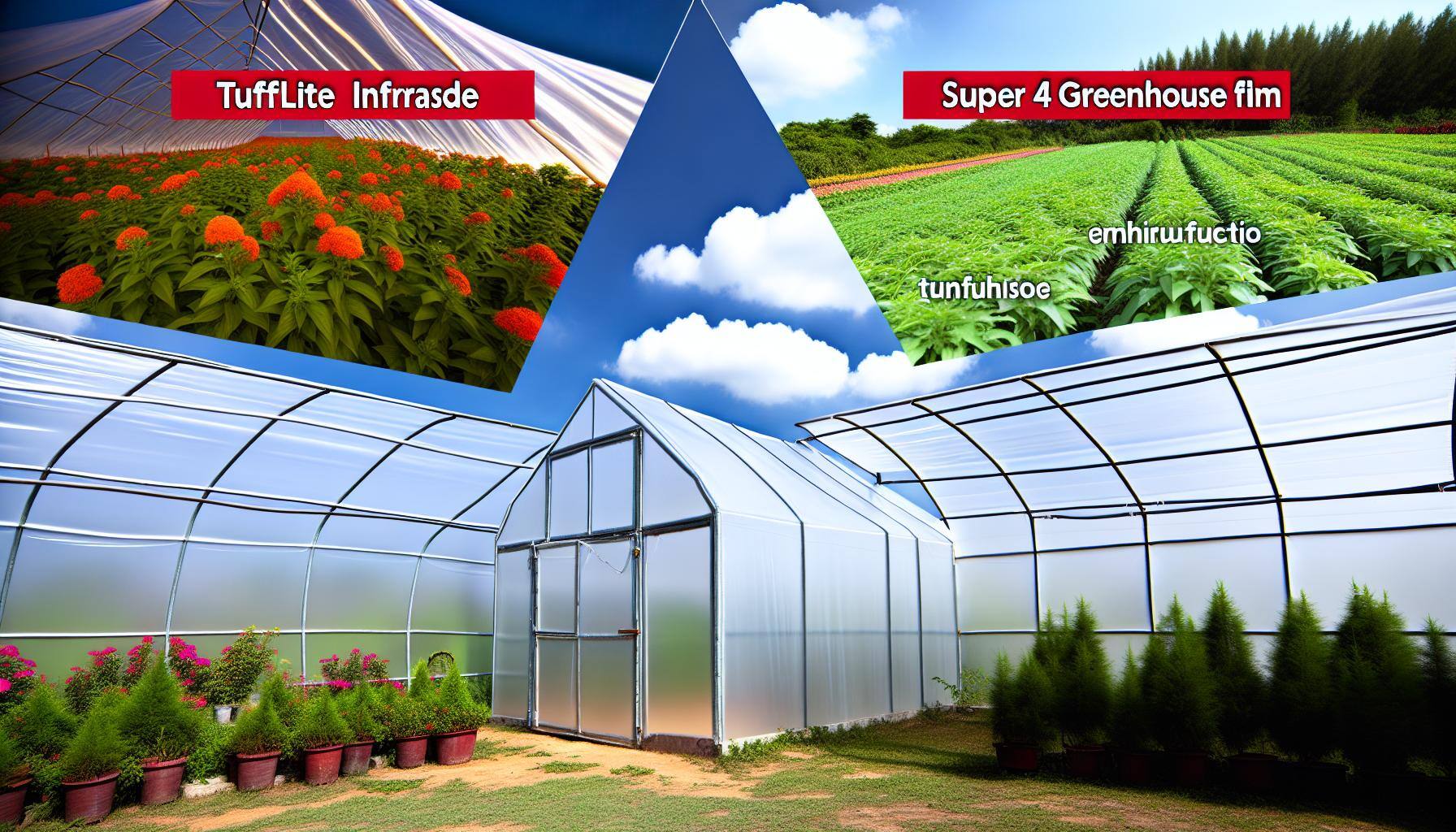
Choosing the right greenhouse film is crucial for protecting your plants and maximizing your harvest. Both Tufflite Infrared and Super4 Greenhouse Film are 6-mil films with a 4-year lifespan, but they cater to different grower needs. Let's delve into their key features to help you decide which one reigns supreme for your greenhouse:

Light & Heat Management:

  • Tufflite Infrared: boasts a light-dispersing feature to retain heat inside the greenhouse, ideal for extending your growing season in colder climates.
  • Super4: focuses on outstanding light transmission, aiming for increased plant growth and higher yields.

Durability:

  • Tufflite Infrared: doesn't explicitly mention advanced tear resistance, but its focus on withstanding harsh weather might translate into good durability.
  • Super4: emphasizes advanced resin technology for superior tear strength and high strength at folds, potentially reducing punctures and tears.

Additional Features:

  • Tufflite Infrared: includes an anti-drip additive for reduced condensation and minimizes the need for pesticides by protecting against pests and diseases.
  • Super4: introduces a bee-friendly feature to enhance pollination, potentially boosting yields further.

The Verdict:

Tufflite Infrared excels in extending your growing season with its heat retention and might be a good choice for colder climates. Its anti-drip and pest protection features also offer additional benefits.

Super4 prioritizes outstanding light transmission and boasts superior tear resistance. The bee-friendly feature makes it ideal for pollination-dependent crops.

Ultimately, the best choice depends on your specific needs:

  • Prioritize season extension and pest control? Choose Tufflite Infrared.
  • Focus on maximizing light transmission, durability, and bee pollination? Super4 might be the better fit.

Consider your climate, crops grown, and budget when making your final decision. Remember, some suppliers might offer both films, allowing you to mix and match based on specific areas within your greenhouse.


Go beyond Tufflite & Super4! Explore 10 greenhouse films & unlock maximum yield potential. Click now:


Tap For Pricing & Info (619) 448-4439

Tags: Tufflite Infrared vs. Super4