
Posted by Nana Hinsley on Tue, Oct 27, 2009 @ 01:47 PM
The victory comes for being remembered for the excellent work that was performed for the customer, not the contant reminder of the damage that was left behind.
1) Today's surface protection films (plastic sheeting/ polyethylene films) are inexpensive insurance against damaging customer's surfaces within work areas, reducing the amount of additional work and time spent repairing damaged surfaces.

2) Clean-upon job sites is a small fraction of the time when proper surface protection is used, especially when coupled with containment of the work area to keep the mess and dust to a minimal area. Tacky door mats can also be used just outside of the contained area, so any debris from the work area is not tracked into clean areas.
3) Probably the number one reason to use surface protection is the increase in customer satisfaction that takes place when the customers see how much the contractor cares about the customer's property. This is hard to measure in dollars and cents, but the increase in referrals is not so hard to measure.
4) Contractors save time and moneyon the job sites by using these measures. Workers tend to be more careful, realizing that someone has taken these steps to make sure the job site is kept in perfect condition, which also tends to make subs do a better job within these job sites. The quality of the workmanship actually increases in many cases, because the psychology changes within the work area.
5) When workers are enclosed with a containment, there are fewer distractions, so they tend to concentrate on what they are doing, rather than looking at everything going on outside of their work area.
6) The contractor's reputation and bottom line are the two things most affected by using good surface protection means. The surface protection protects the bottom line, and keeps the profit in the project. The contractor's reputation increases every time an extremely happy customer has a successful project they can build upon.
7) Makes it much easier to get that final payment from customers. Much less chance of little things holding up the final payment. How many times has that happened to you?
Posted by Nana Hinsley on Mon, Oct 26, 2009 @ 12:12 PM
In its simplest terms, the main difference between the different types of plastic is the way their cellular structure, or molecules bond with each other, and how tightly they are formed.
- 1) Low Density Polyethylene (LDPE), most common type of plastic sheeting, very flexible, most often from 0.5 mil thick to about 40 mil in flexible sheeting forms. Good conformability to surfaces. Because the cell structure is not as strong or dense as some other types of plastic sheeting, it is not typically as strong or puncture resistant as other forms or blends, but has thousands of common uses. Widely used for everything from construction and agricultural sheeting (often called Visqueen), Engineered Plastic Sheeting of countless types for such things as Vapor Retarders (also called Vapor Barriers by many), Surface Protection films, Pond and Canal Liners, Covers, Tarps, Abatement Plastic, Containment, packaging, and the list goes on.
- 2) Linear Low Density Polyethylene (LLDPE), blended form of LDPE where the film has much more flexibility, tensile strength, and more conformability. LLDPE is "softer" and more pliable, so is an excellent choice for such things as pond liners, or blended into other films to give them extra strength and flexibility. This is perfect for an application like a self-adhesive carpet protection film, where the film needs to have an amazing amount of strength in a very thin film to absorb impacts, but not tear or puncture. In this form of poly, the molecules all line up and strongly hold together as the film is stretched to give the structure much more strength and elongation than LDPE. Most common in thicknesses ranging from 0.5 mil to 40 mil in flexible plastic sheeting.
- 3) Medium Density Polyethylene (MDPE), the least commonly used form of polyethylene for flexible plastic sheeting. Has more strength than LDPE, a little more chemical resistance, tighter cell structure, more puncture and tear resistance. Often blended with LDPE and or LLDPE to give the attributes one is looking for in a particular type of film. For instance, many pond liners have MDPE to add some strength and toughness, without adding too much stiffness.
- 4) High Density Polyethylene (HDPE, aka HD), widely used for many applications. HDPE is the strongest, toughest, most chemical resistant, and least flexible of these four types of polyethylene. It also has the most UV resistance of the bunch without additive packages to increase this attribute. HDPE has a very tight cell structure, making it very difficult for other molecules to pass through its structure on a microscopic level. HDPE is the most easily field seamed of these products, and is generally used on an industrial level in thicknesses from about 12 mil to 100 mil thick. Most golf course ponds are lined with HDPE, most industrial ponds and canal liners, secondary containment liners, root barriers, many applications where chemical resistance is needed. This is also used in thousands or maybe millions of applications in thinner forms, especially in blends with the other types of polyethylene, because the HDPE adds much strength and toughness with its very tight bonds with other molecules.
The density of polyethylene is measured in a column of water, and they are all classified depending on ranges of density. LDPE (and LLDPE) are generally within the range of 0.919-0.924 g/cm³. MDPE are generally within the range of 0.926-0.940 g/cm³. HDPE are generally within the range of 0.941-0.965 g/cm³. These numbers can vary slightly depending on your source, and are not set in stone, just general guidelines.
Written by Lee Hinsley- Plastic Sheeting Expert
Posted by Nana Hinsley on Wed, Oct 21, 2009 @ 11:39 AM
Being in the Plastic Sheeting business, numerous questions have been raised about the difference between the NFPA 701-04 Test 1 and NFPA 701-04 Test 2 for plastic
sheeting passing the proper certifications to meet the fire safety codes.
We went to the NFPA (National Fire Protection Association) Standard Methods of Fire Tests for Flame Popagation of Textiles and Films handbook to briefly explain the differences. To quote from their website (http://www.nfpa.org/)
Test Method 1 shall not apply to specimens having an areal density greater than 700 g/m2 (21 oz/yd2).
Test Method 2 (flat specimen configuration) shall be used for fabrics, including multilayered fabrics, films, and plastic blinds, with or without reinforcement or backing, with areal densities greater than 700 g/m2 (21 oz/yd2).
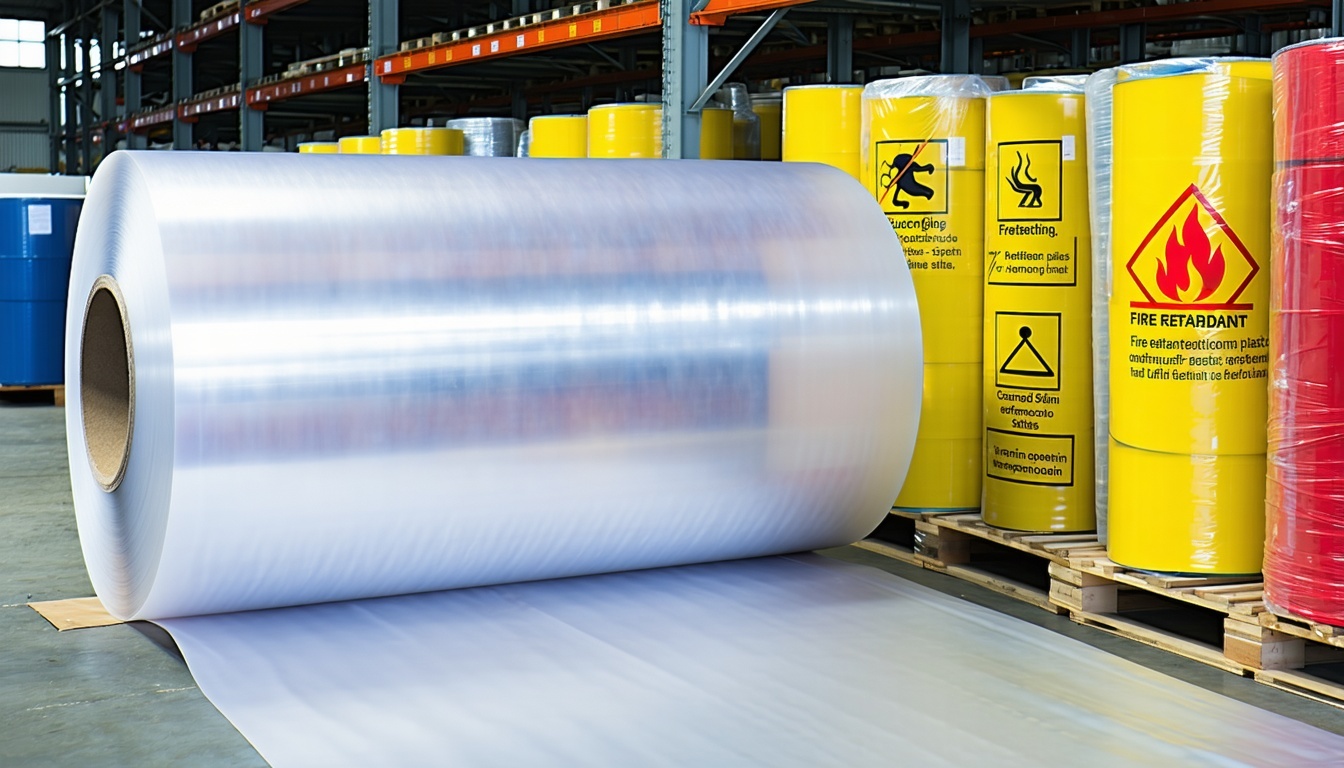
In other words, black fire retardant plastic sheeting in the 4 mil or 8 mil does not have enough density to qualify for this test.
NFPA is an international nonprofit organization that was established in 1896. It's mission is to reduce the worldwide burden of fire and other harzards by providing in part codes and standards for fire prevention.

Posted by Nana Hinsley on Thu, Oct 15, 2009 @ 11:47 AM
While we do not pretend to be experts on building the back yard ice skating rink, we can share with you some tips from Lee Hinsley- who has built a rink or two!
Step 1:
Plan- Plan- Plan: There are a few things to consider before you get started.
- What will the rink be used for? Family skating or hosting ice hockey games?
The ice hockey rink will need to be larger with higher walls to keep those wild flying hockey pucks from damaging any people or things that could be in the way. Walls on hockey rinks need to be reinforced to the appropriate levels for the skaters using the rink.
- How many people do you expect to be on the rink at the same time? You don't want any collisions if your rink is too small to accommodate the number of excited skaters.
Step 2: Decide on the shape and location for your rink.
The surface of the rink should be flat. Before the ground gets too cold, it is time to level the area. If you are planning to put stakes into the ground for the frame, better do that before the ground is frozen. Measure your rink and purchase the plastic sheeting to hold in the water. The liner will need to extend over the top of the wooden frame. White plastic usually works the best, freezes the fastest, keeps the ice crisp and fast.
Step 3: Lay down the plastic sheeting , and fill with water. Keep the excited children off your prized rink until it is good and frozen solid.
Step 4: Take lots of video and pictures. 10 years from now you will be glad that you did!
Have a blast!