
Can You Stop Black Plastic Sheeting from Degrading in the Sun? Not Quite, But Here Are Your Options
Black plastic sheeting is a handy tool for a variety of projects, from weed control in your garden to temporary construction barriers. But there's a catch: exposure to sunlight breaks down the plastic over time. This blog dives into the reality of sun degradation and explores some alternative options depending on your project needs.
Understanding Sun Degradation:
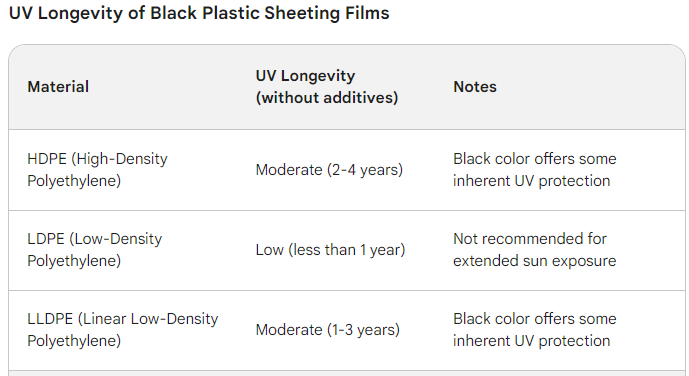
The culprit behind plastic sheeting's demise is ultraviolet (UV) radiation from the sun. UV rays break down the plastic's molecular structure, making it brittle, cracked, and ultimately unusable. Black plastic, while offering some UV protection due to its color, still succumbs to sun damage, although typically at a slower rate than clear plastic.
So, Can You Completely Stop Degradation?
Unfortunately, there's no magic bullet to completely prevent sun degradation of black plastic sheeting. However, there are ways to slow down the process:
-
Limited Sun Exposure: Plan your project to minimize direct sunlight exposure. If possible, cover the black plastic with shade cloths or tarps when not in use.
-
Higher Quality Plastic: Opt for higher quality, UV-treated black plastic sheeting. These have additives that offer some additional protection against UV rays, extending their lifespan.
Important Note: Even UV-treated plastic will eventually degrade. The manufacturer's specifications will indicate the expected lifespan under sunlight exposure.
Choosing the Right Option:
The best solution depends on your specific project requirements:
-
Project Duration: For short-term projects, black plastic sheeting might suffice. For long-term needs, consider more durable alternatives.
-
Sun Exposure: If your project involves significant sun exposure, opt for UV-treated plastic or explore alternative materials.
-
Environmental Impact: If eco-friendliness is a concern, consider landscape fabric, mulch, or woven ground covers as they decompose naturally.
Remember, while black plastic sheeting offers a convenient solution, sun degradation is inevitable. By understanding the limitations and exploring alternative options, you can choose the best material for your project's needs and environmental impact.
Please visit the UV Resistant Plastic Sheeting Page to find multiple UV Treated Films here.